

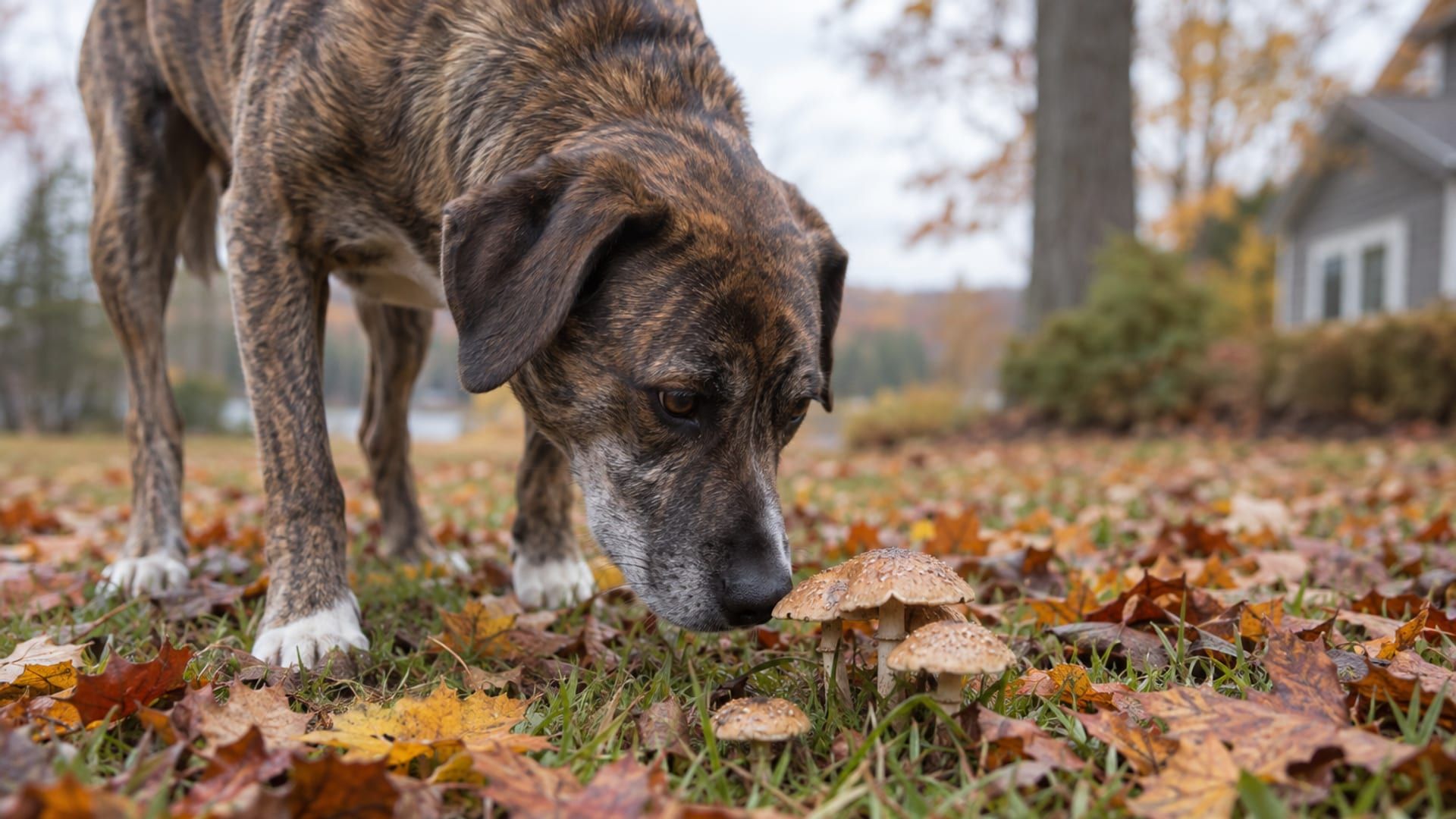
The biggest fall hazards for dogs are wild mushrooms, rodent poison, antifreeze, moldy compost and, to a lesser degree, acorns. Most are easy to avoid once you know to look for them, and knowing the warning signs means you can act fast if your dog gets into something.
Fall in Ohio is a great season to be a dog. Cooler walks, leaf piles to dive into, and crisp mornings that make even the laziest pup perk up. But the same season brings a crop of mushrooms after every rain, mice moving indoors (and the poison that follows them), and garage projects that leave chemicals within reach.
Here’s what to watch for, and what to do if your dog eats something they shouldn’t.
Key Takeaways
- Treat every wild mushroom as toxic; most are harmless, but the dangerous ones are hard to tell apart.
- Rodent poisons are highly toxic and sometimes tasty to dogs; keep them out of reach or use pet-safe pest control.
- Even a small amount of ethylene glycol antifreeze can be fatal; clean up spills right away.
- Acorns can cause stomach upset and are a choking or blockage risk for small dogs.
- If your dog eats something toxic, call your vet or a pet poison hotline immediately; don’t wait for symptoms.
Table of Contents
- Wild Mushrooms
- Acorns and Other Yard Debris
- Rodent Poison
- Antifreeze and Garage Chemicals
- Compost Piles and Moldy Food
- Other Fall Hazards to Know
- What to Do if Your Dog Eats Something Toxic
- Fall Safety Doesn’t Mean Skipping the Fun
- Summary
- Frequently Asked Questions
Wild Mushrooms
After a rainy stretch, mushrooms seem to pop up overnight in lawns, parks and wooded trails. According to the ASPCA, the vast majority of mushrooms have little or no toxicity, but the roughly 1% that are highly toxic can cause life-threatening problems in pets.
The problem is that even experts can struggle to tell them apart, especially from a nibbled fragment. Pet Poison Helpline advises treating any unidentified mushroom as toxic.
What to do:
- Walk your yard after rain and pull up any mushrooms you find (wear gloves and bag them).
- Keep your dog close on wooded trails during mushroom season.
- If your dog eats one, call your vet right away. If you can, bring a sample (or a photo) of the mushroom.
Acorns and Other Yard Debris
Acorns are everywhere in early fall, and some dogs treat them like snacks. The ASPCA notes that acorns contain tannins that can irritate the digestive system, causing vomiting, diarrhea or belly pain. Long-term damage is rare because most dogs don’t eat enough, but the hard shells can also be a choking or intestinal blockage risk, especially for small dogs.
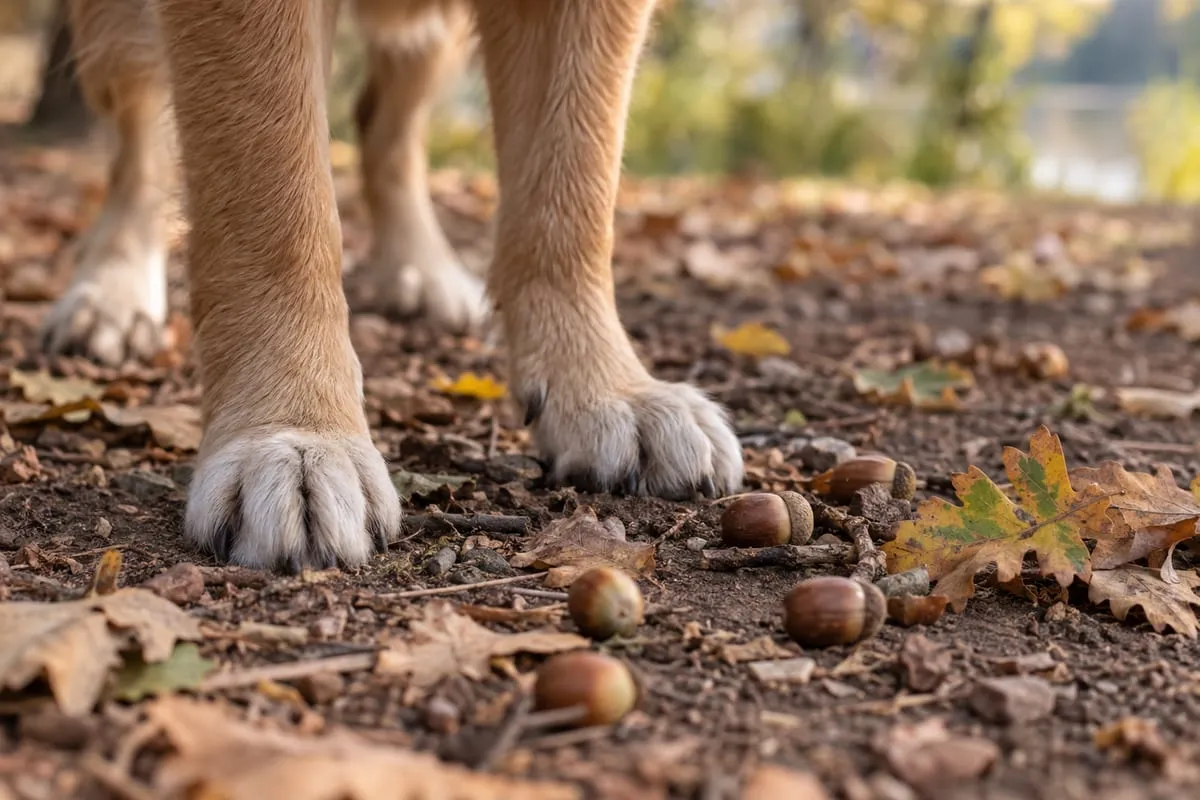
Rake or sweep up acorns in the areas your dog uses most, and practice a solid “leave it.” It’s one of the most useful cues you can teach for fall walks.
Rodent Poison
As the weather cools, mice and rats look for a warm way into our homes, and rodent baits come out. The ASPCA warns that rodenticides are highly toxic to pets, and if ingested, the results could be fatal. Some baits are also made to taste appealing, which is a problem with curious dogs.
- Use pet-safe traps or a pest control company that understands you have pets.
- Never put bait anywhere a dog could reach, including behind appliances or in the garage.
- If you have a service in, ask exactly what they used and where, and keep the product name handy.
Different poisons cause different problems, from bleeding to seizures, and symptoms can be delayed. That’s why fast action, before signs appear, matters so much.
Antifreeze and Garage Chemicals
Fall is when a lot of people winterize cars, mowers and boats. Traditional antifreeze contains ethylene glycol, which tastes sweet and is extremely dangerous. Pet Poison Helpline notes that a very small amount can be fatal, and that immediate treatment with an antidote is vital.
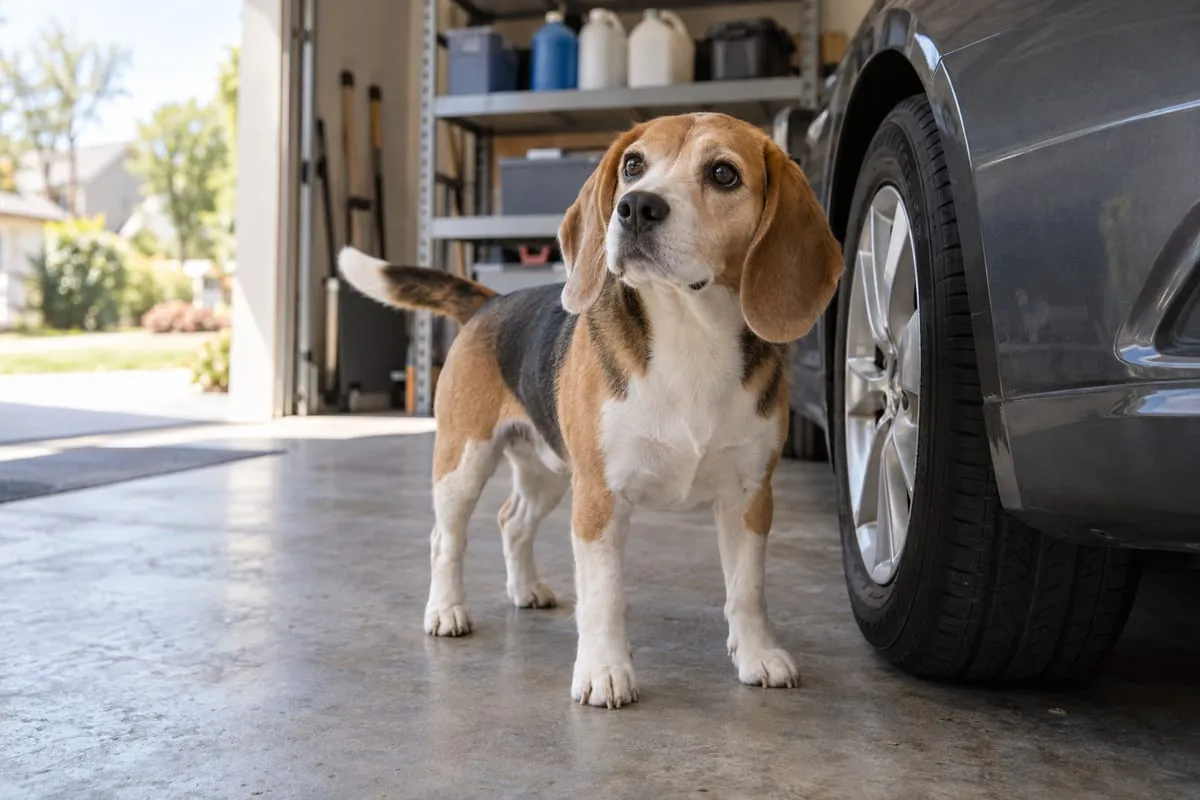
- Clean up any drips or spills immediately.
- Store coolant and chemicals on high shelves, tightly closed.
- Consider propylene glycol-based antifreeze, which the ASPCA notes is a less toxic alternative.
Early signs of antifreeze poisoning can look like a dog acting drunk, very thirsty, or lethargic. Don’t wait to see if it passes.
Compost Piles and Moldy Food
Compost and moldy leftovers can contain tremorgenic mycotoxins. According to Pet Poison Helpline, these can cause tremors and seizures within 30 minutes to several hours of eating them.
Keep compost in a closed bin your dog can’t get into, and be careful with fallen, rotting fruit from backyard trees. The same goes for the trash after a fall cookout.
Other Fall Hazards to Know
- Mothballs, which often come out with winter clothes, can be very toxic.
- Back-to-school supplies like glue sticks and markers can cause stomach upset or blockages if swallowed.
- Snakes get more active as they prepare for winter, which can increase the chance of bites on trails.
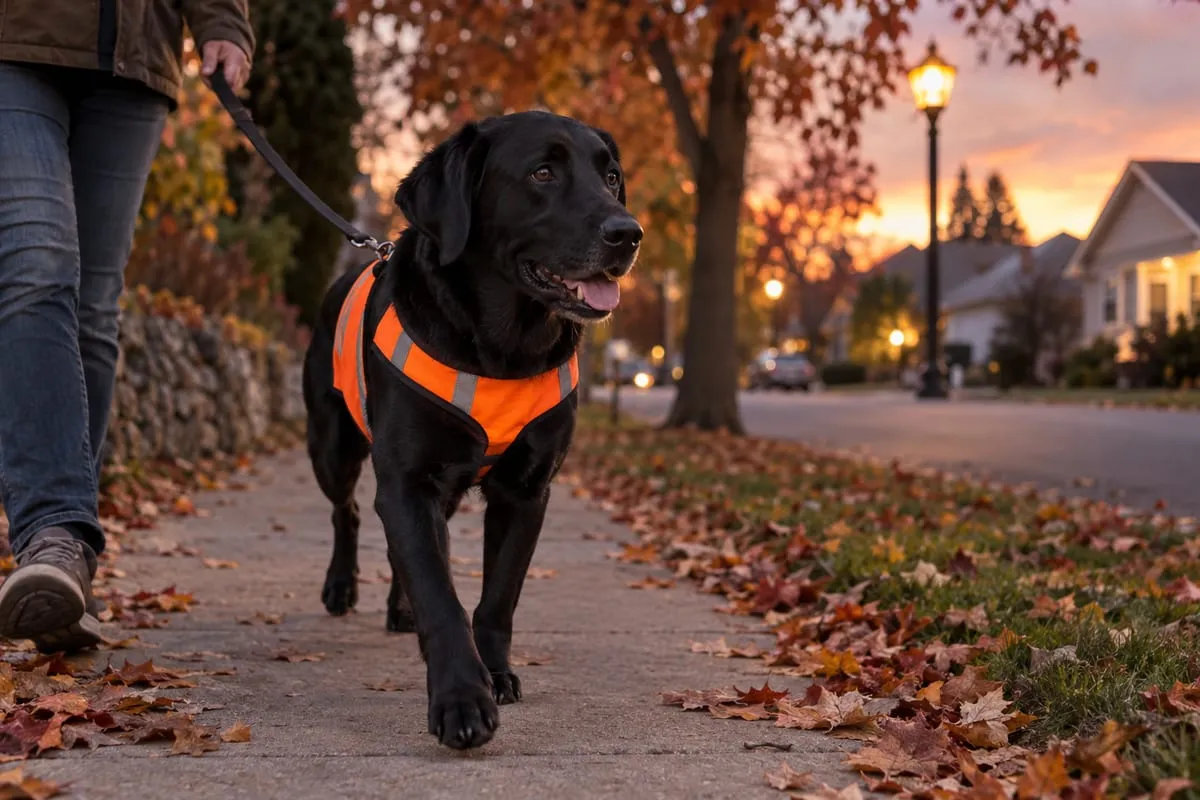
- Shorter days mean more walks at dusk. A reflective vest or light-up collar helps drivers see your dog.
If you’re also doing fall yard work, our guides to pet-safe lawn care and choosing pet-friendly lawn care products cover fertilizers and weed control. And if you’re bringing plants inside for the winter, check our list of pet-safe indoor plants.
What to Do if Your Dog Eats Something Toxic
- Stay calm and move your dog away from the source.
- Call your vet, an emergency vet, or a pet poison hotline right away. Pet Poison Helpline is (855) 764-7661, and the ASPCA Animal Poison Control Center is (888) 426-4435. Both may charge a consultation fee.
- Don’t make your dog vomit unless a professional tells you to.
- Bring the packaging, a sample, or a photo of what your dog ate.
Fast action makes a real difference, especially with rodent poison and antifreeze, where treatment works best before symptoms start.
Fall Safety Doesn’t Mean Skipping the Fun
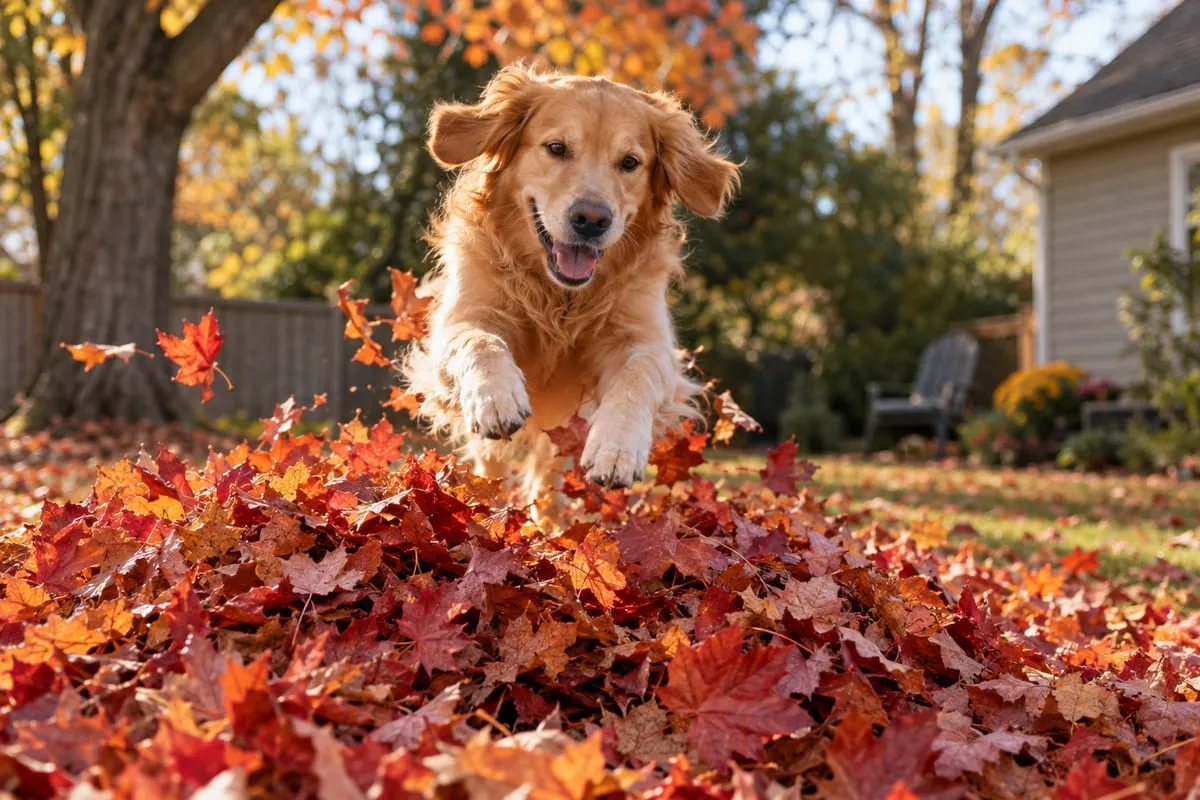
None of this means your dog should miss out on the best season of the year. Leaf piles (clean ones, without mushrooms or sticks hiding inside), crisp walks and cooler-weather adventures are all part of the fun. Our post on ways to exercise your dog has ideas for making the most of it.
On busy fall days when you can’t supervise every sniff, daycare is a safe place to burn off energy. Our dog daycare play areas are supervised all day.
Summary
The main fall hazards for dogs are wild mushrooms, rodent poison, antifreeze, compost and acorns. Clear your yard after rain, store chemicals up high, use pet-safe pest control, and practice “leave it” on walks. If your dog eats something worrying, call your vet or a poison hotline right away rather than waiting for symptoms.
For more seasonal safety tips, browse our household safety posts.
Frequently Asked Questions
Are acorns poisonous to dogs?
Acorns contain tannins that can upset a dog’s stomach, causing vomiting or diarrhea. Serious poisoning is rare, but whole acorns can cause choking or blockages, especially in small dogs. Call your vet if your dog eats a lot of them or seems unwell.
What do I do if my dog ate a mushroom in the yard?
Call your vet or a pet poison hotline right away, even if your dog seems fine. Take a photo or bring a sample of the mushroom, since identifying it helps decide on treatment.
Are fallen leaves safe for dogs to play in?
Generally, yes. Just check piles for mushrooms, sharp sticks and debris first, and discourage your dog from eating leaves, which can upset their stomach.
Are mums toxic to dogs?
Chrysanthemums are listed as toxic to dogs by the ASPCA and can cause vomiting, diarrhea and drooling. Keep potted mums out of reach on the porch.