

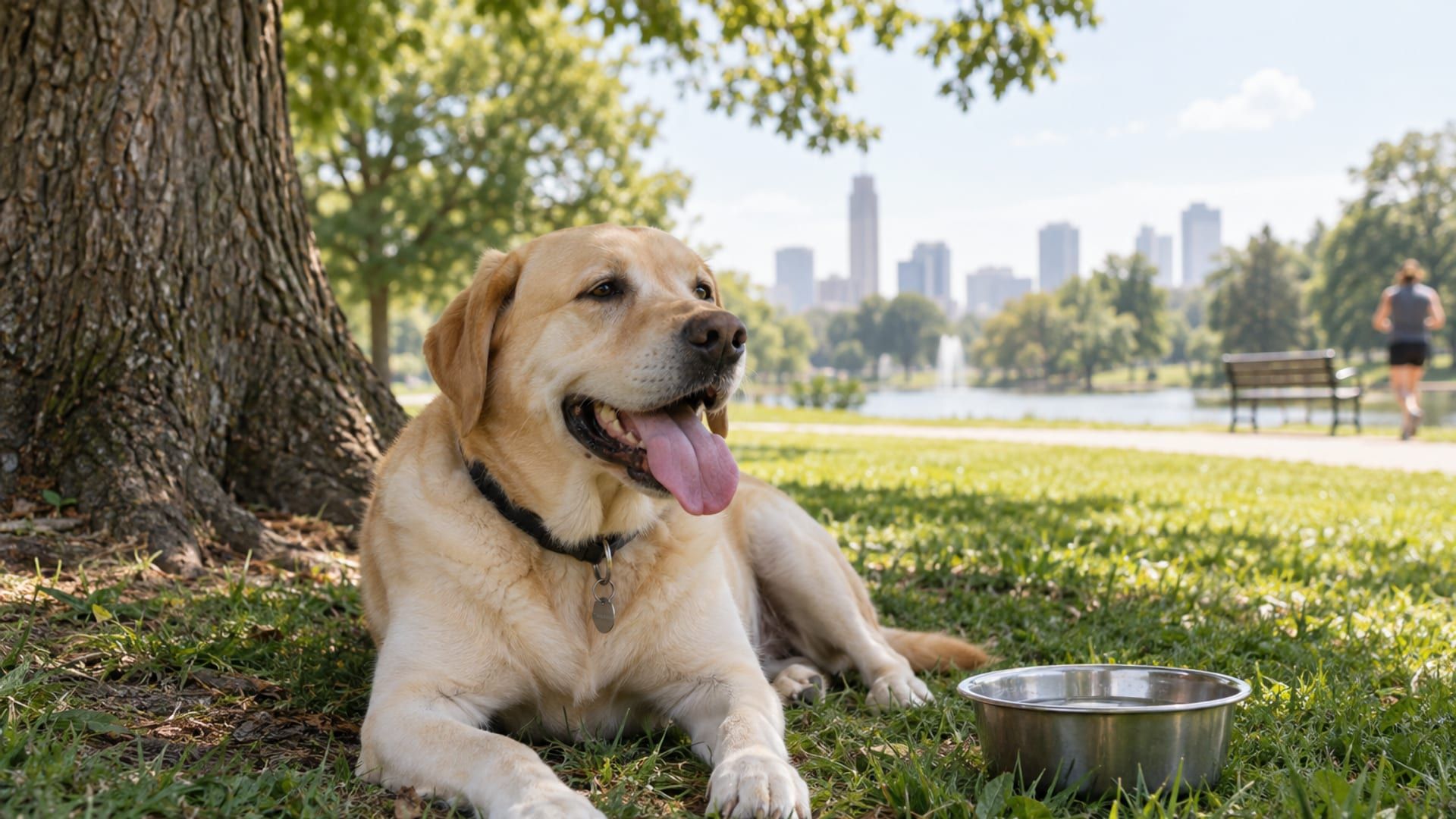
There’s no single temperature where it becomes too hot for every dog, but once the air is in the 80s and humid, many dogs are at real risk of overheating, and flat-faced, senior, overweight and heavy-coated dogs hit their limit sooner. Pavement is the other half of the equation: on a sunny day, asphalt gets far hotter than the air and can burn paw pads.
Columbus summers are sneaky. A morning that feels pleasant can turn into a thick, humid afternoon, and dogs don’t sweat the way we do. They cool themselves mostly by panting, which works a lot less well when the air is already hot and wet.
Here’s how to read the signs, plan your walks around the heat, and know when overheating has become an emergency.
Key Takeaways
- Humidity matters as much as temperature, because panting cools a dog less effectively in muggy air.
- Brachycephalic (flat-faced) breeds, seniors, puppies, overweight dogs and dogs with heart or lung disease overheat fastest.
- If pavement is too hot for the back of your hand, it’s too hot for paws.
- Heavy panting, bright red gums, drooling and wobbliness are warning signs; collapse is an emergency.
- Cool an overheated dog with cool or room-temperature water, never ice, and get to a vet.
Table of Contents
- Why Dogs Struggle in the Heat
- Which Dogs Are Most at Risk?
- How to Check if the Pavement Is Too Hot
- Signs Your Dog Is Overheating
- How to Keep Your Dog Cool This Summer
- Summary
- Frequently Asked Questions
Why Dogs Struggle in the Heat
Dogs sweat a little through their paw pads, but they rely mostly on panting to move heat out of their bodies. Panting works by evaporation. When the air is already humid, less moisture evaporates, and the cooling effect drops off.
That’s why a humid 82°F afternoon can be harder on a dog than a dry 90°F day. Watch your dog, not just the forecast. A dog that’s panting hard, slowing down or looking for every patch of shade is telling you they’ve had enough.
Which Dogs Are Most at Risk?
Every dog can overheat, but some get there much faster. The ASPCA notes that flat-faced breeds like pugs can’t pant as effectively, and recommends keeping them, along with elderly, overweight and heart- or lung-diseased pets, in air-conditioned rooms when it’s very hot.
Higher-risk dogs include:
- Brachycephalic breeds: bulldogs, French bulldogs, pugs, Boston terriers, boxers and shih tzus
- Seniors and young puppies, who regulate body temperature less efficiently
- Overweight dogs (our post on nutrition and exercise for weight management can help there)
- Thick, double-coated breeds like huskies and malamutes
- Dogs with heart, breathing or other medical conditions
- Very driven, high-energy dogs who won’t stop playing on their own
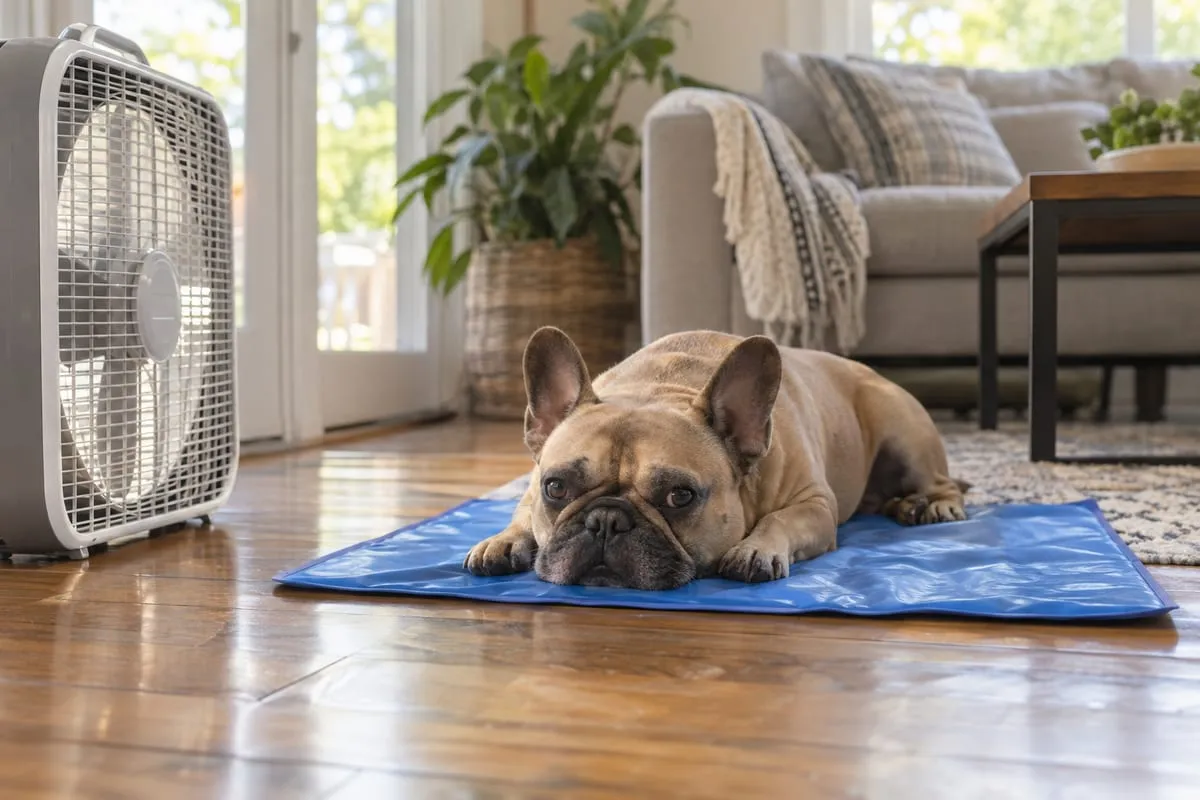
If your dog is in one of these groups, plan for shorter, earlier walks and more time inside on hot days.
How to Check if the Pavement Is Too Hot
Sun-baked asphalt can be dramatically hotter than the air temperature, and paw pads can blister on it. The ASPCA advises keeping walks short on very hot pavement for exactly that reason.
A simple rule of thumb: press the back of your hand flat on the pavement. If you can’t comfortably hold it there for several seconds, it’s too hot for your dog’s feet.
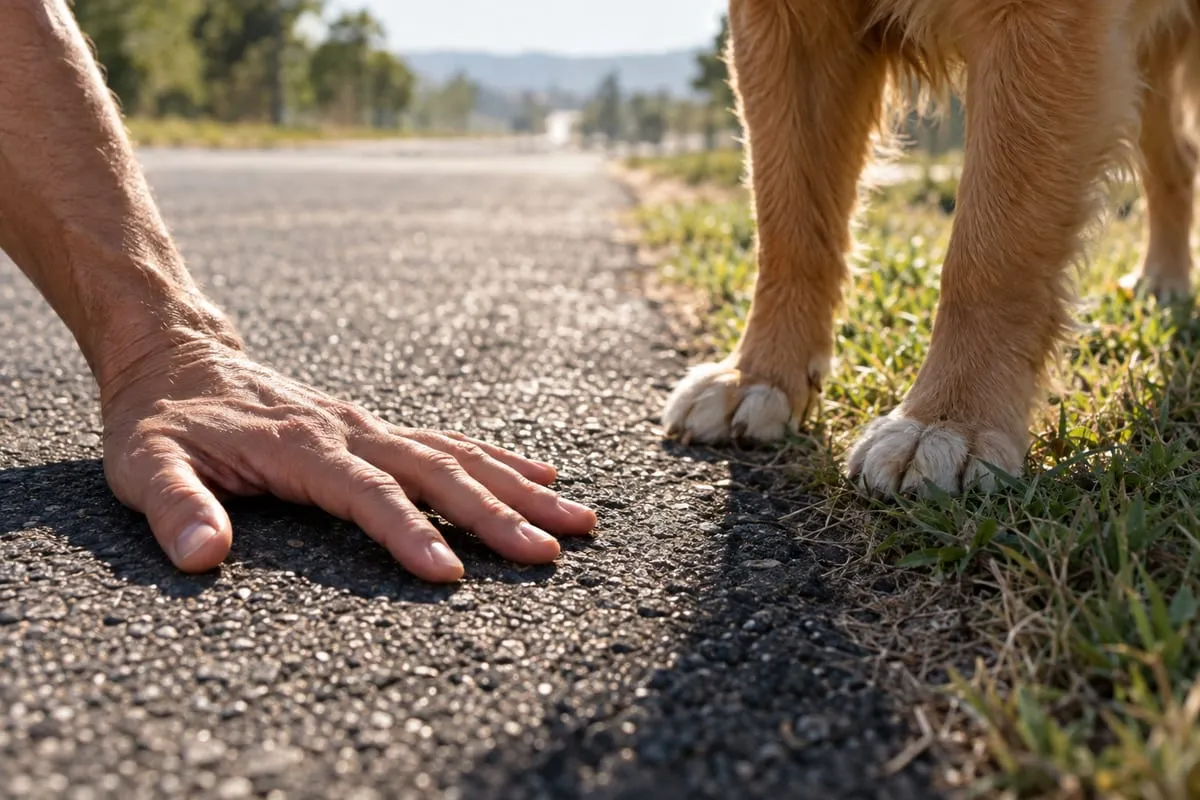
On those days, stick to grass, shaded trails or early-morning sidewalks, and check paws when you get home for redness, blisters or limping.
Signs Your Dog Is Overheating
Heat-related illness can move quickly. Early warning signs include:
- Heavy, frantic panting or noisy breathing
- Thick drooling
- Bright red gums and tongue
- Skin that feels hot to the touch
- Restlessness, or lagging behind on a walk
As it gets worse, you may see vomiting or diarrhea, wobbliness, confusion, and collapse. According to the AKC, heatstroke typically occurs when a dog’s body temperature rises above about 105.8°F. At that point it’s a medical emergency.
What to Do if You Suspect Heatstroke
- Get your dog out of the heat into shade or air conditioning right away.
- Cool them with cool or room-temperature water, focusing on the belly, armpits and paws, and use a fan if you have one. VCA Animal Hospitals warns that ice or ice water can drop the temperature too quickly and cause additional complications.
- Offer small amounts of water if your dog is alert and wants to drink. Don’t force it.
- Call your vet or the nearest emergency hospital and head there. Even if your dog seems to bounce back, heatstroke can cause internal damage that isn’t visible right away.
This isn’t a substitute for veterinary care. If you’re unsure, call your vet.
How to Keep Your Dog Cool This Summer
The good news is that heatstroke is very preventable. A few habits go a long way.
Plan Walks Around the Heat
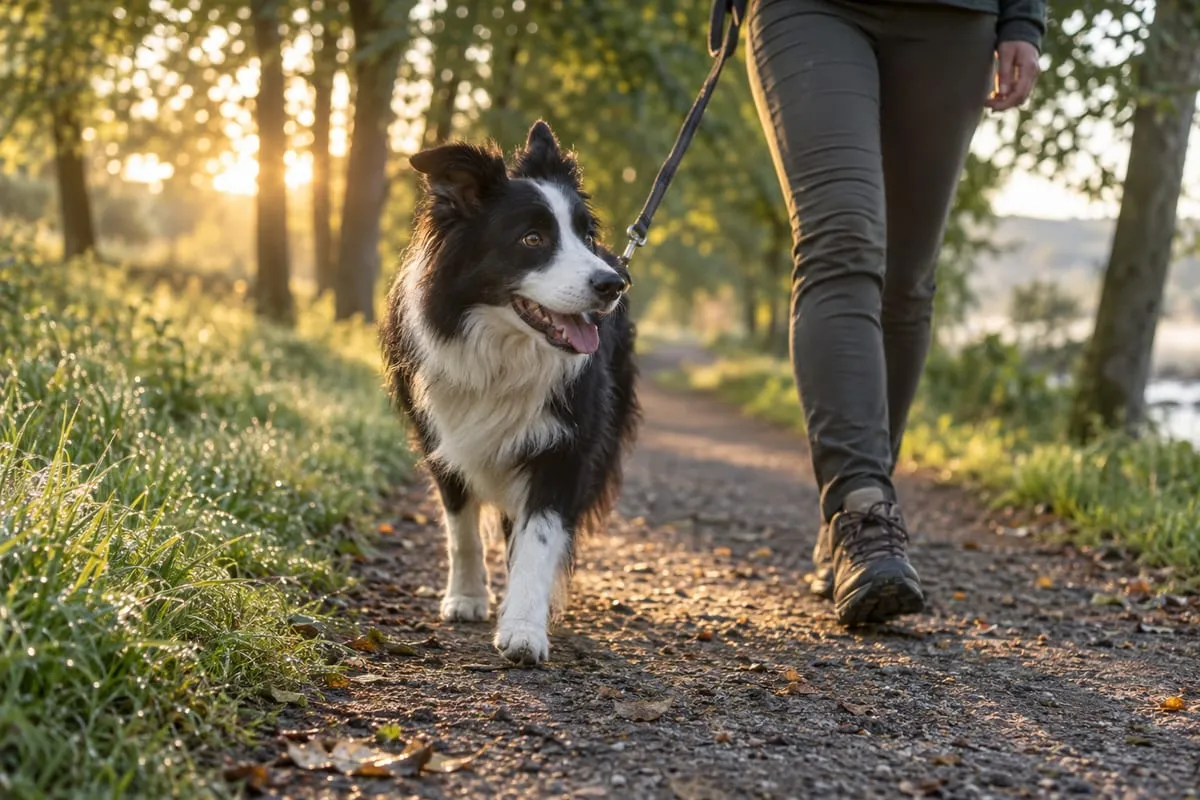
Walk early in the morning and later in the evening, when the sun is low and the pavement has cooled. Save the long hikes for cooler days, and turn midday outings into quick potty breaks.
If your dog needs to burn off energy, move some of it indoors. Puzzle feeders, snuffle mats and short training sessions tire dogs out mentally without the heat. Our post on ways to exercise your dog has more ideas, including a few that work inside.
Water, Shade and Cooling Gear
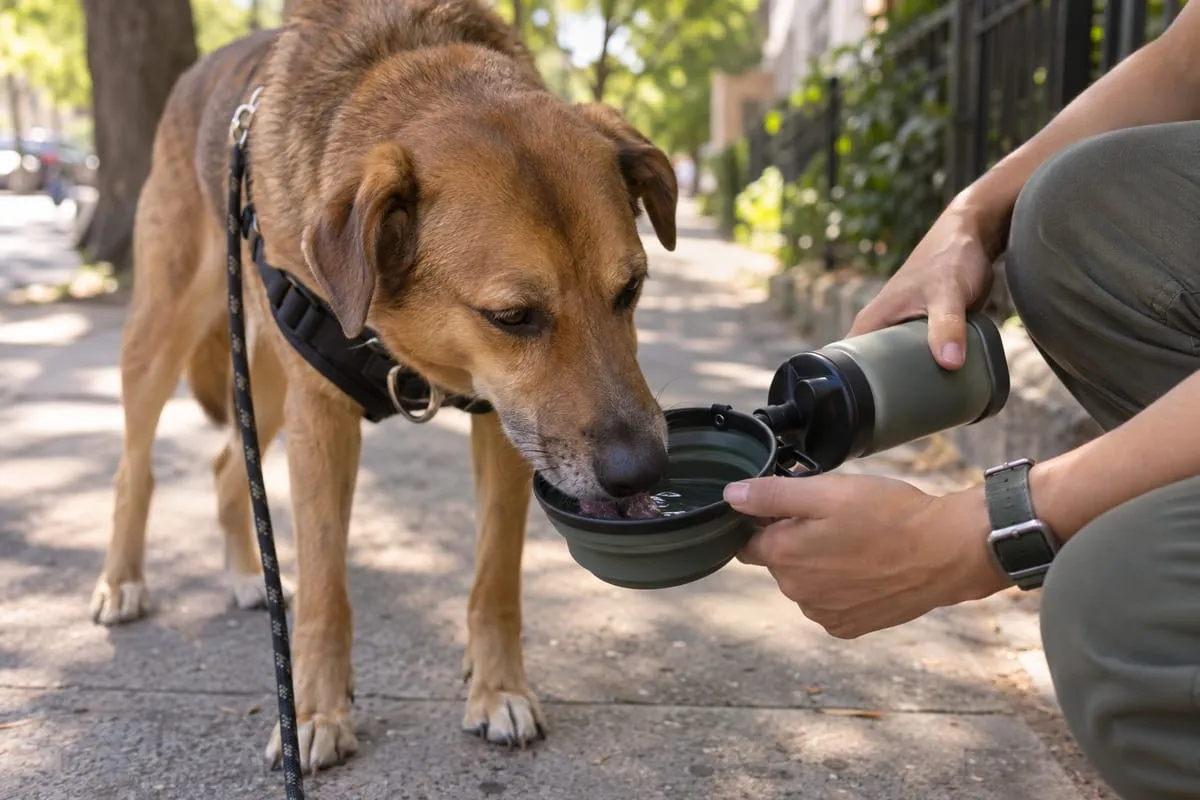
Always bring water on walks, even short ones. A collapsible bowl or a travel bottle with a built-in trough makes it easy.
At home, make sure there’s fresh water and real shade. A tree is better than a pop-up canopy, and inside is better than both on the hottest days. Cooling mats, a fan, or a kiddie pool in the shade can help, and frozen cubes of our homemade bone broth make a great cool treat. They’re all extras, though, not a replacement for getting out of the heat.
Never Leave a Dog in a Parked Car
Not even for “just a minute.” Cars heat up fast, and cracking the windows doesn’t make a meaningful difference. The ASPCA is blunt about it: never leave pets alone in a parked vehicle, because it can lead to fatal heatstroke. If you’re running errands, leave your dog at home in the AC.
If you’ll be out all day during a heat wave, daycare is another option. At our dog daycare, pups get supervised play with plenty of rest breaks, water and climate control, so they burn off energy without baking on the sidewalk.
Summary
So, how hot is too hot for dogs? It depends on the dog and the humidity, but once it’s in the 80s and muggy, most dogs need shorter, shadier, earlier walks, and high-risk dogs need even more caution. Check the pavement with your hand, bring water every time, and never leave your dog in a parked car.
Learn the warning signs of overheating, and if you see them, cool your dog with cool (not ice-cold) water and get to a vet. For more seasonal safety tips, browse our household safety posts.
Frequently Asked Questions
What temperature is too hot to walk a dog?
There’s no exact cutoff, but many dogs struggle once it’s in the 80s with high humidity. Walk early or late, stay on grass or shade, and test the pavement with the back of your hand first.
Should I shave my dog for summer?
Generally, no. The ASPCA says trimming longer hair is fine, but a dog’s coat layers help protect against overheating and sunburn, so don’t shave it down to the skin.
Can dogs get sunburned?
They can, especially dogs with thin or light-colored coats and pink skin on the nose and ears. Shade and limiting midday sun are the best protection; ask your vet before using any sunscreen, since some human sunscreens aren’t safe for dogs.
Is it OK to give my dog ice cubes?
Most dogs can enjoy a few ice cubes as a treat. The concern is using ice or ice water to cool a dog that’s already overheating, which vets advise against because it can cool them too quickly.