

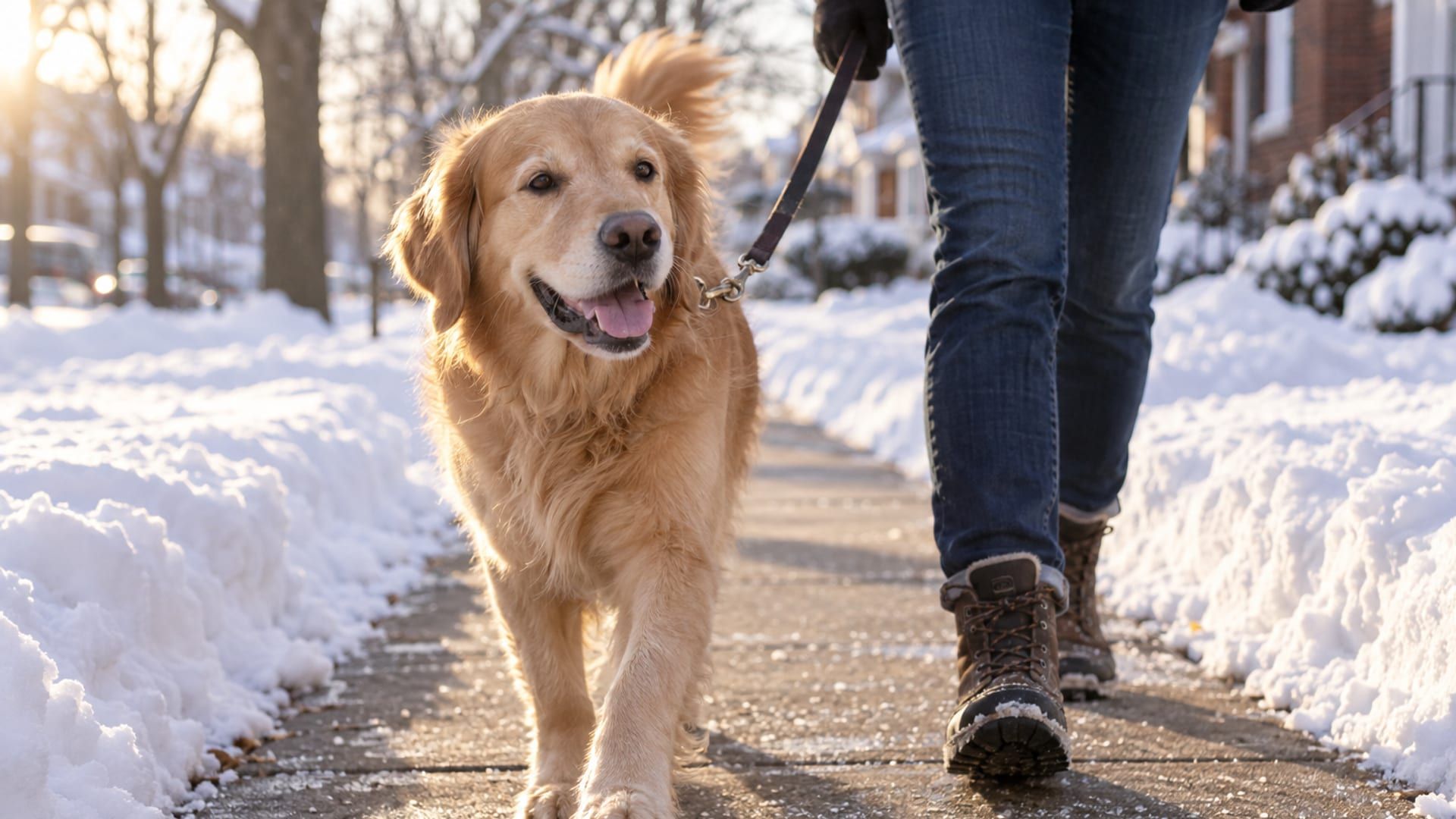
Good winter paw care for dogs comes down to three habits: protect the pads before you head out, rinse and dry the paws as soon as you get home, and check them often for cracks or redness. Do those, and most dogs get through an Ohio winter without a single sore foot.
The tricky part is that winter paw problems don’t announce themselves. Your dog won’t tell you the sidewalk salt stings or that a bit of ice is packed between their toes. They’ll just start licking their feet, lifting a paw mid-walk, or refusing to go past the end of the driveway.
We see the effects every winter at daycare, when pups come in off salted sidewalks with damp, gritty feet. Below is the routine we recommend to owners, plus the gear that’s worth buying and the signs that mean it’s time to call your vet.
Key Takeaways
- Rock salt and chemical de-icers can irritate and dry out paw pads, and dogs can swallow them when they lick their feet afterward.
- Washing and drying your dog’s feet and belly after every winter walk is the single most effective habit for healthy paws.
- A paw balm or vet-approved protectant before walks, plus trimmed fur between the toes, cuts down on cracking and ice buildup.
- Booties and sweaters aren’t for every dog, but they help small, short-coated and senior dogs.
- Pale, grey or painful skin on the paws after cold exposure can be frostbite, which needs a vet right away.
Table of Contents
- Why Winter Is Hard on Your Dog’s Paws
- How to Protect Your Dog’s Paws Before a Walk
- What to Do After Every Winter Walk
- Are Dog Booties Worth It?
- Does Your Dog Need a Sweater or Coat?
- Signs of Paw Injury and Frostbite
- Keeping Your Dog Active When It’s Too Cold Outside
- Summary
- Frequently Asked Questions
Why Winter Is Hard on Your Dog’s Paws
Paw pads are tough, but they aren’t built for a season of salt, slush and frozen concrete. Winter attacks them from three directions at once: chemicals on the ground, cold and moisture on the walk, and dry heated air when you get home.
Rock Salt and De-Icers
Most of the sidewalks and parking lots around Columbus get treated with rock salt or chemical ice melt from the first freeze until spring. Those crystals are sharp, and the salty slush they leave behind pulls moisture out of the skin. Over a few weeks, that adds up to dry, cracked pads that can sting with every step.
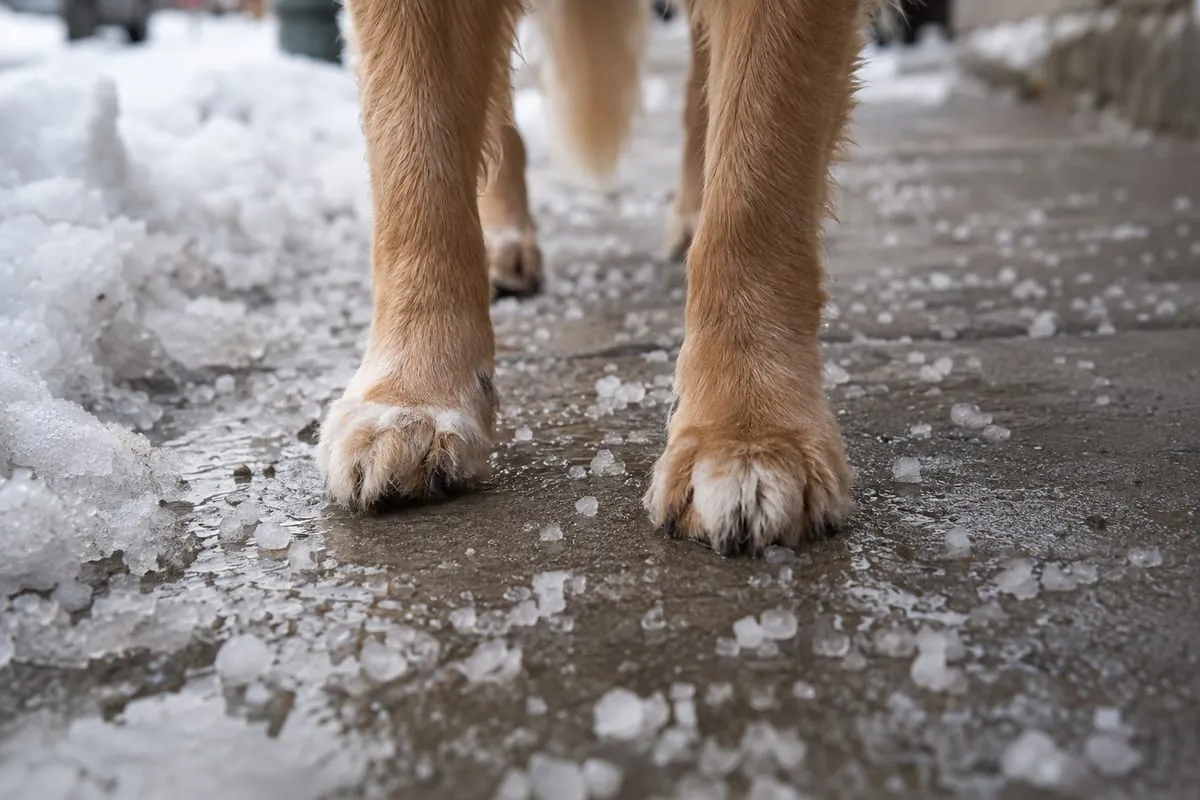
The bigger worry is what happens afterward. Dogs clean their feet by licking them, so whatever is stuck to their paws ends up in their mouth. A little is usually just an upset stomach, but it’s one more reason to wash and dry your pet’s feet and stomach after winter walks, as the ASPCA recommends.
While you’re thinking about chemicals, check your garage too. Antifreeze is sweet-tasting and extremely toxic to dogs. Clean up any spills right away, and if you think your dog got into something, call your vet or the ASPCA Animal Poison Control Center.
Ice, Snow and Dry Air
Long-haired dogs collect snowballs between their toes. Those little ice clumps pull on the fur and press into the skin, which is why you’ll sometimes see a dog stop dead on a walk and start chewing at a foot.
Then there’s the indoor side of winter. Furnace heat dries out skin, including the skin on the paws, so pads that got wet and salty outside dry out even faster once your dog is back on the couch.
How to Protect Your Dog’s Paws Before a Walk
A couple of minutes of prep before you clip on the leash saves a lot of trouble later. This matters most on days when you know the sidewalks have just been salted.
Trim the Fur Between the Toes
Neatly trimmed fur between the pads gives ice and salt less to cling to. Use blunt-tipped scissors or a small trimmer, keep the fur level with the pads rather than cutting into them, and stop if your dog gets wiggly. If you’d rather not, a groomer can tidy paws in a few minutes.
Don’t shave your dog’s coat down for winter, though. The ASPCA specifically advises against shaving dogs to the skin in cold weather, since that coat is their insulation.
Use a Paw Balm
Before going out, the ASPCA suggests you massage petroleum jelly or another vet-approved paw protectant into the paw pads. A thin layer acts as a barrier against salt and slush and helps keep the pads supple.
Our pick is a wax-based paw balm made for dogs, since it stays on through a walk and doesn’t leave greasy prints all over the house. Whatever you use, apply a small amount, rub it in well, and keep an eye on your dog so they don’t lick it all off before you’re out the door.
What to Do After Every Winter Walk
This is the habit that makes the biggest difference, and it takes about a minute:
- Keep a towel and a shallow tub of lukewarm water by the door. Once it’s set up, you’ll actually use it.
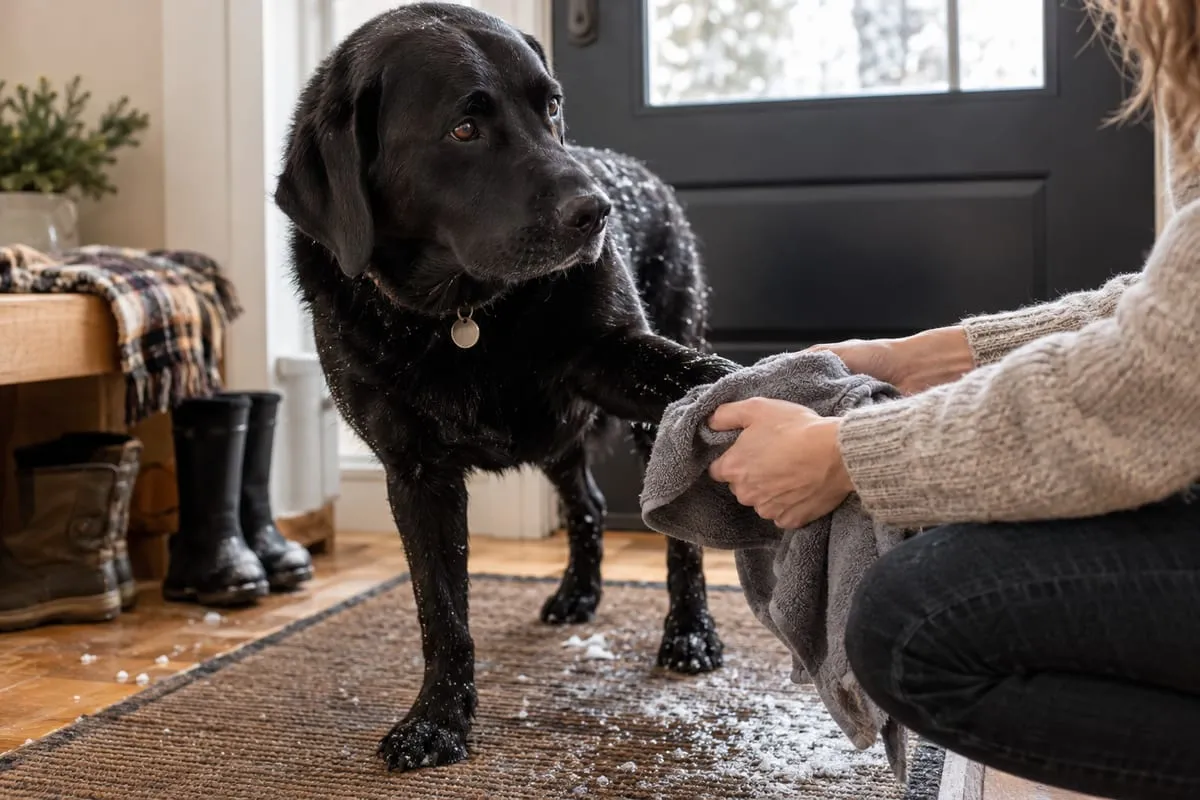
- Dip or wipe each paw to rinse off salt, de-icer and grit. Don’t forget the belly and lower legs, where salty slush splashes up.
- Dry thoroughly, including between the toes. Damp fur between the pads is where irritation starts.
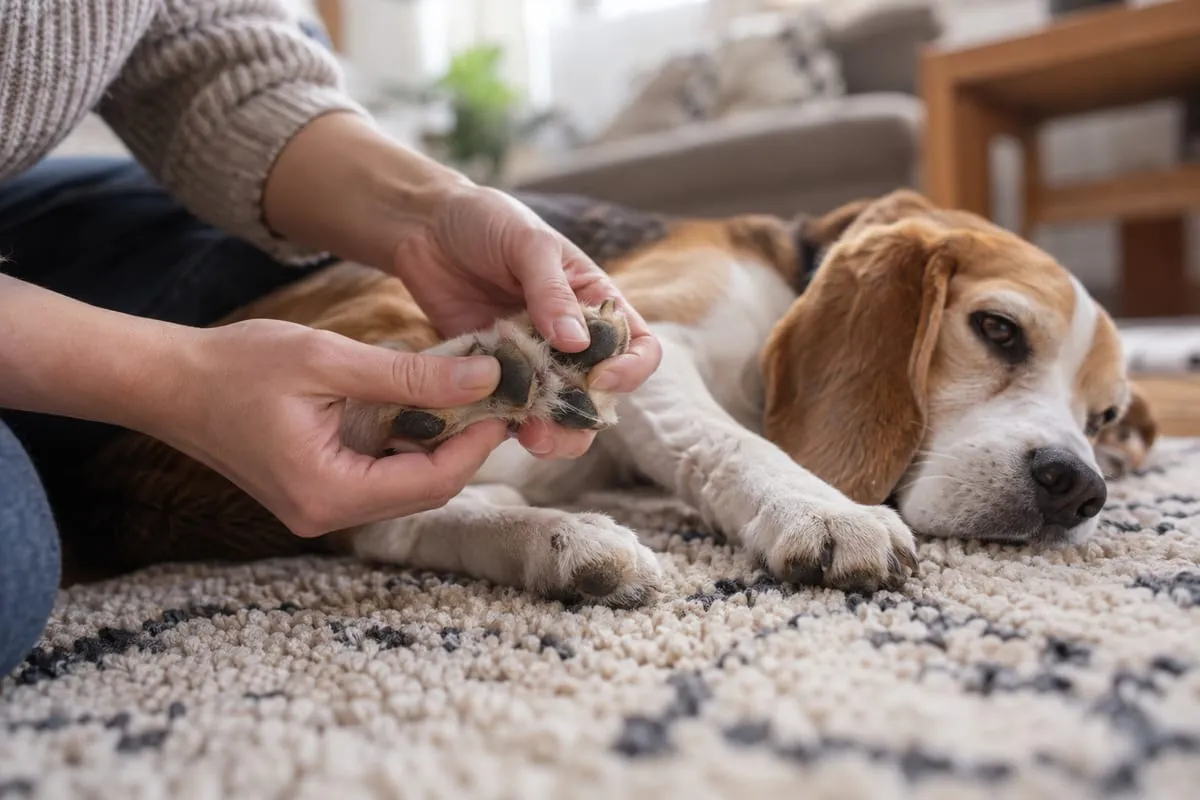
- Take a quick look at the pads and between the toes for cracks, cuts, redness or packed-in ice.
If your dog isn’t a fan of having their feet handled, practice when it isn’t cold out. Touch a paw, give a treat, and build up slowly. It’s the same approach we use with nervous pups at daycare, and it pays off at nail trims too.
If your dog does get dry or cracked pads, a dog-safe paw balm applied at bedtime (when they’re less likely to lick it off) can help them heal. Deep cracks, bleeding or limping are a reason to see your vet.
Are Dog Booties Worth It?
For some dogs, absolutely. Booties keep salt, sharp ice and slush off the pads entirely, and the ASPCA notes that they also keep sand and salt from lodging between bare toes.
They’re most worth it if your dog:
- Walks mostly on heavily salted sidewalks or parking lots
- Has sensitive or previously injured paws
- Is a senior dog, or has a medical condition that affects circulation
- Has long fur between the toes that collects ice balls
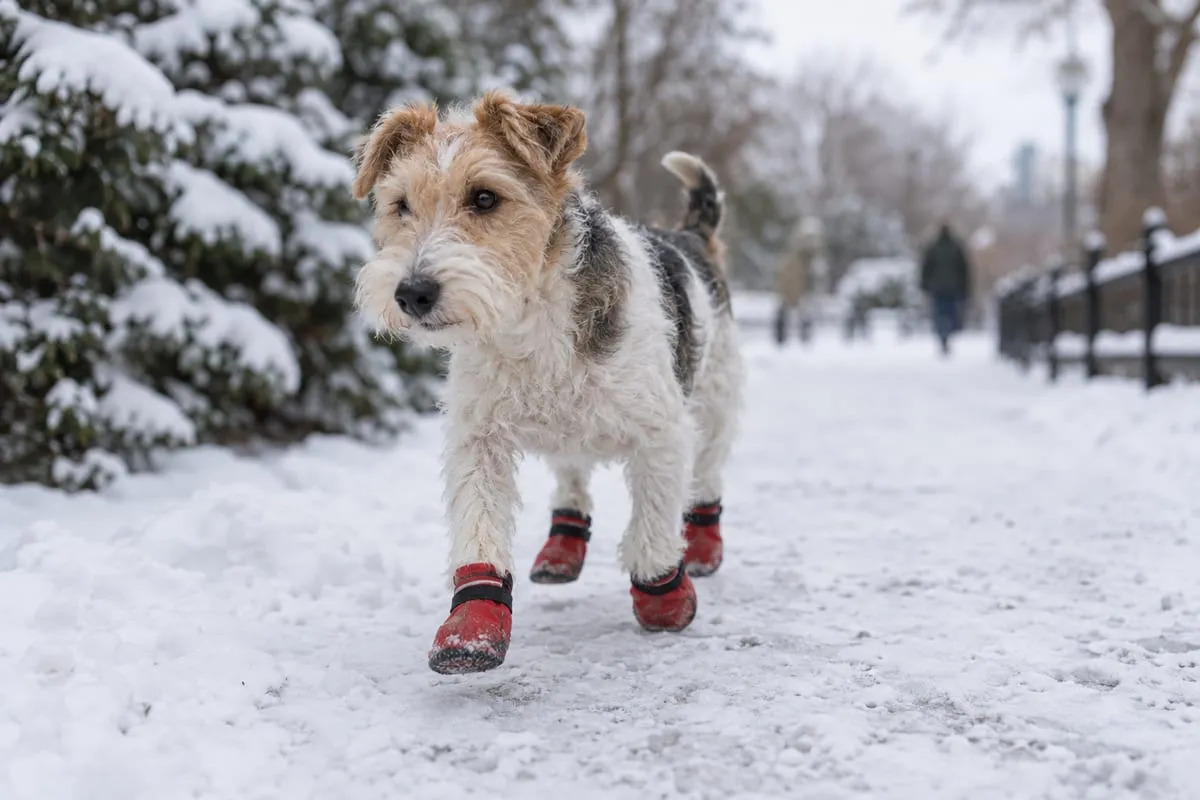
Honestly, expect a funny first walk. Most dogs high-step around the living room the first time they wear booties. Put them on indoors for a few minutes at a time with plenty of treats before you try them outside. Look for a snug fit, a grippy sole and an adjustable strap, and check for rubbing after the first few outings.
If your dog flat-out refuses booties, don’t force it. A good paw balm and the post-walk routine above still go a long way.
Does Your Dog Need a Sweater or Coat?
It depends on the dog. A husky or a Bernese mountain dog was built for this. A greyhound, a Chihuahua or a senior pup with a thinning coat was not.
According to the ASPCA, short-haired dogs may need a coat or sweater with a high collar or turtleneck that covers them from the base of the tail to the belly. Small dogs, lean breeds and dogs with short coats lose heat faster, and so do puppies and seniors.
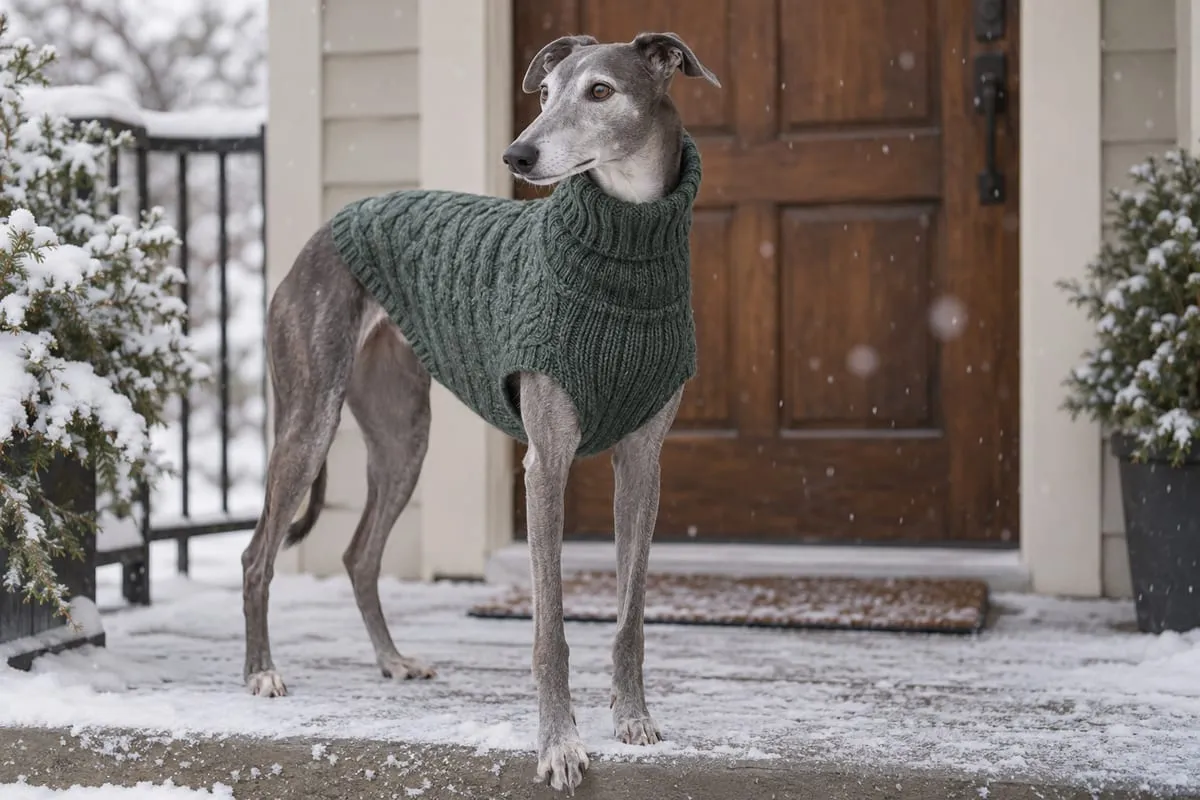
A simple rule of thumb: if it’s too cold for you to stand outside comfortably without a coat, it’s probably too cold for a short-coated dog without one. Keep walks shorter on the coldest days, and bring your dog inside if they start shivering, slowing down or holding up a paw.
Signs of Paw Injury and Frostbite
Most winter paw trouble is minor, but it’s worth knowing what to watch for. Check your dog’s feet after every walk for:
- Cracked, rough or bleeding pads
- Redness or swelling between the toes
- Excessive licking or chewing at the feet
- Limping, or holding a paw up
Frostbite is less common but serious. According to VCA Animal Hospitals, the paws, ears and tail are most at risk, especially when a dog is wet. Frostbitten skin may look pale, grey or bluish and feel cold or brittle, and it’s often painful to the touch. Signs can take several days to show up fully.
If you suspect frostbite, move your dog somewhere warm and call your vet right away. VCA notes that you should not rub or massage the area, and should not use direct dry heat like a heating pad or hair dryer. This article isn’t a substitute for veterinary advice, so when in doubt, call your vet.
Keeping Your Dog Active When It’s Too Cold Outside
Shorter walks don’t have to mean a bored, restless dog. On the coldest days, swap some of your outdoor time for indoor games: hide-and-seek with treats, a flirt pole in the hallway, or a puzzle feeder at mealtime. Our post on the top ways to exercise your dog has more ideas, and if your dog eats fast when they’re cooped up, slow feeders turn dinner into a brain game.
Keeping activity up through the winter also helps with weight. Fewer long walks plus the same amount of food is a recipe for a few extra pounds by spring, so it’s worth reading up on balancing nutrition and exercise.
Daycare is another option on the coldest weeks. Our dog daycare gives pups a full day of supervised play with their friends, so they burn off energy without their paws ever touching a salted sidewalk.
Summary
Winter paw care for dogs isn’t complicated, but it does need to be consistent. Protect the pads with trimmed fur and a balm before you go out, wash and dry the feet and belly after every walk, and check for cracks, redness or ice between the toes.
Add booties or a sweater if your dog is small, short-coated, senior or walks on heavily salted routes. And if you ever see pale, grey or painful skin after cold exposure, get your dog to the vet.
For more ways to keep your dog safe around the house this season, browse our household safety posts.
Frequently Asked Questions
Is rock salt bad for dogs’ paws?
Rock salt can irritate and dry out paw pads, and the sharp crystals can be uncomfortable to walk on. Dogs can also swallow salt and de-icer residue when they lick their feet, so rinse and dry their paws after walks on treated surfaces.
How do I know if my dog’s paws are too cold?
Watch your dog rather than the thermometer. Lifting paws, stopping and refusing to walk, shivering, or licking their feet are all signs it’s time to head inside. Small, short-coated, young and senior dogs get cold fastest.
Can I put Vaseline on my dog’s paws?
The ASPCA lists petroleum jelly as one option for protecting paw pads before winter walks. Use a thin layer and rub it in well so your dog doesn’t lick it off. A wax-based balm made for dogs works similarly and is less messy.
How often should I check my dog’s paws in winter?
After every walk. A quick look when you’re drying their feet is enough to spot cracks, cuts, redness or ice between the toes before they turn into a bigger problem.
Are pet-safe ice melts really safe?
They’re gentler than plain rock salt, and the ASPCA recommends using pet-friendly ice melts when you can. But you can’t control what your neighbors or the city use, so keep up the post-walk paw wash either way.