

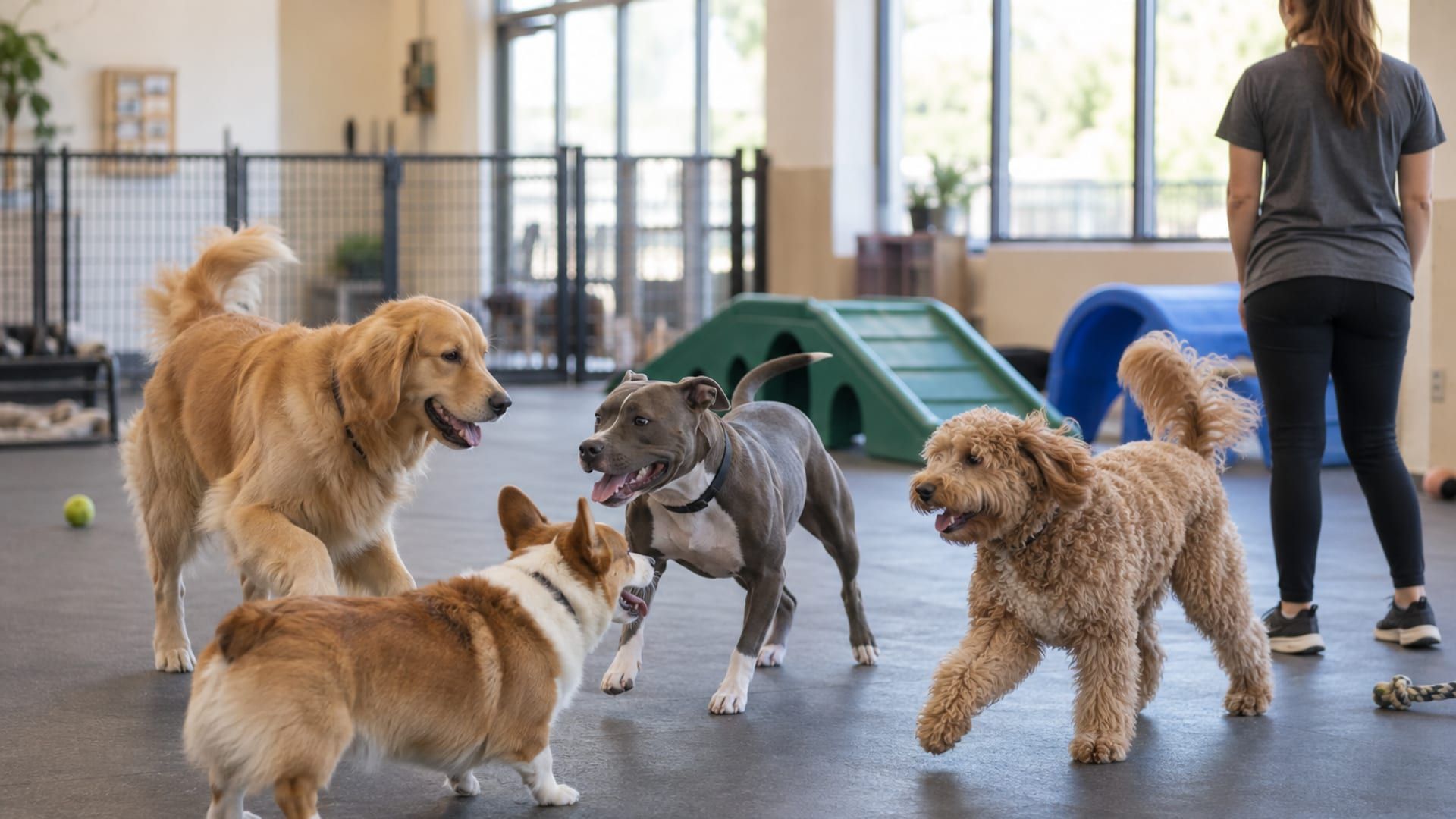
A safe staff-to-dog ratio for daycare is one where trained staff can watch every dog in the group and step in early, and across the industry most daycares operate somewhere between 20 and 35 dogs per attendant. Some boutique daycares keep smaller, more intimate groups with fewer dogs per person. There’s no single national rule, so the right number depends on the group, the room and, above all, the people doing the watching.
That’s why the number alone doesn’t tell you much. A trained attendant who knows the dogs can safely supervise a well-matched group of calm, social dogs, while a rowdy group of adolescents needs closer watching.
Below we look at how ratios work in practice, why they vary, and the questions that tell you more about safety than any single number.
Key Takeaways
- There’s no U.S. federal standard for dog daycare staffing, so each daycare sets its own, sometimes guided by local rules.
- Most daycares operate between 20 and 35 dogs per attendant; some boutique daycares run smaller groups.
- The right ratio depends on group size, play style, dog size, the room, and above all staff training.
- How staff supervise (eyes on the group, trained in dog body language, quick to step in) matters more than the headcount.
- Ask any daycare how groups are split, how staff are trained, and who’s watching the dogs during breaks.
Table of Contents
- Is There a Required Staff-to-Dog Ratio for Daycare?
- What Ratio Do Most Daycares Use?
- Why Do Ratios Vary From Group to Group?
- Is the Ratio the Most Important Safety Factor?
- What Questions Should I Ask a Daycare About Supervision?
- What Are the Red Flags?
- Summary
- Frequently Asked Questions
Is There a Required Staff-to-Dog Ratio for Daycare?
In most places, no single required number applies. The U.S. has no federal staffing rule for dog daycares, and state and local rules range from specific numbers to a general duty of “adequate supervision.”
So when a daycare quotes a ratio, it’s usually its own policy, sometimes shaped by its insurer or by local licensing. That’s not a bad thing. It just means the number is worth a follow-up question.
What Ratio Do Most Daycares Use?
Across the industry, most daycares operate between about 20 and 35 dogs per attendant in group play, with the number shifting through the day as dogs arrive, nap and go home. Some boutique daycares keep a more intimate ratio with smaller groups, which usually shows up in a higher price.
Where local rules do set a number, they tend to sit in the same range. For example, Winnipeg’s dog daycare standards allow one staff member per 20 large dogs or per 25 small dogs in a group (rules change, so check the current version).
Very low ratios sound reassuring, but the number on its own doesn’t make a group safe. A well-matched group with a trained, attentive attendant is safer than a smaller group of poorly matched dogs with someone who’s distracted.
Why Do Ratios Vary From Group to Group?
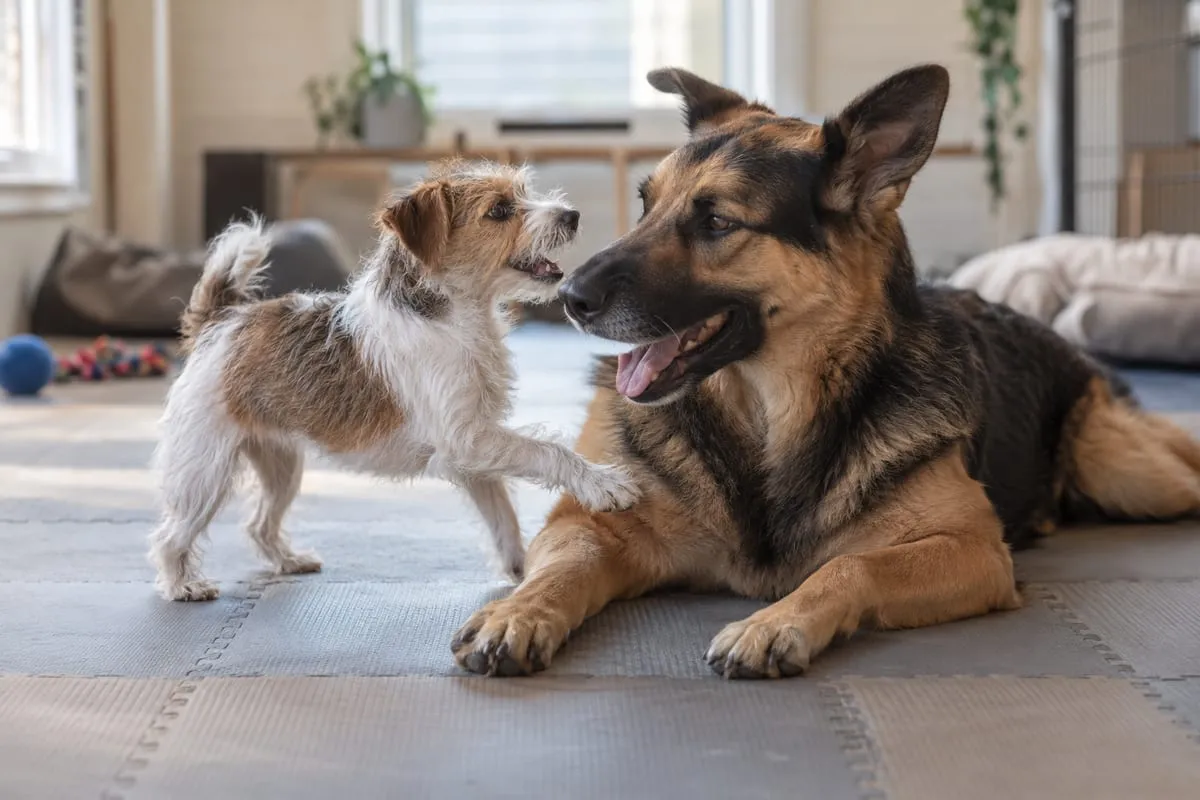
Because “25 dogs” can mean very different things. A good daycare adjusts staffing to the group in front of it, not just to a number on the wall.
Group Size
Bigger groups have more interactions to track, which is why large groups get more staff on the floor, not just a bigger room. Several attendants working one large group as a team can cover each other’s blind spots.
Play Style and Energy
A room of wrestlers and chasers needs closer watching than a room of mellow seniors. Many daycares split dogs by play style for this reason. Some run one mixed group and lean on close supervision instead. Both can work when staff know the dogs.
Dog Size
Big and small dogs can play well together, but size differences raise the stakes when play gets rough. A 90-pound dog running full tilt can knock over a 10-pound dog without meaning to. Mixed-size groups need staff watching for that.
The Space and the Schedule
Layout matters. Blind corners, play equipment and doors all affect how many dogs one person can really see. So does the time of day: drop-off rushes and the end of a long play block are busier than nap time.
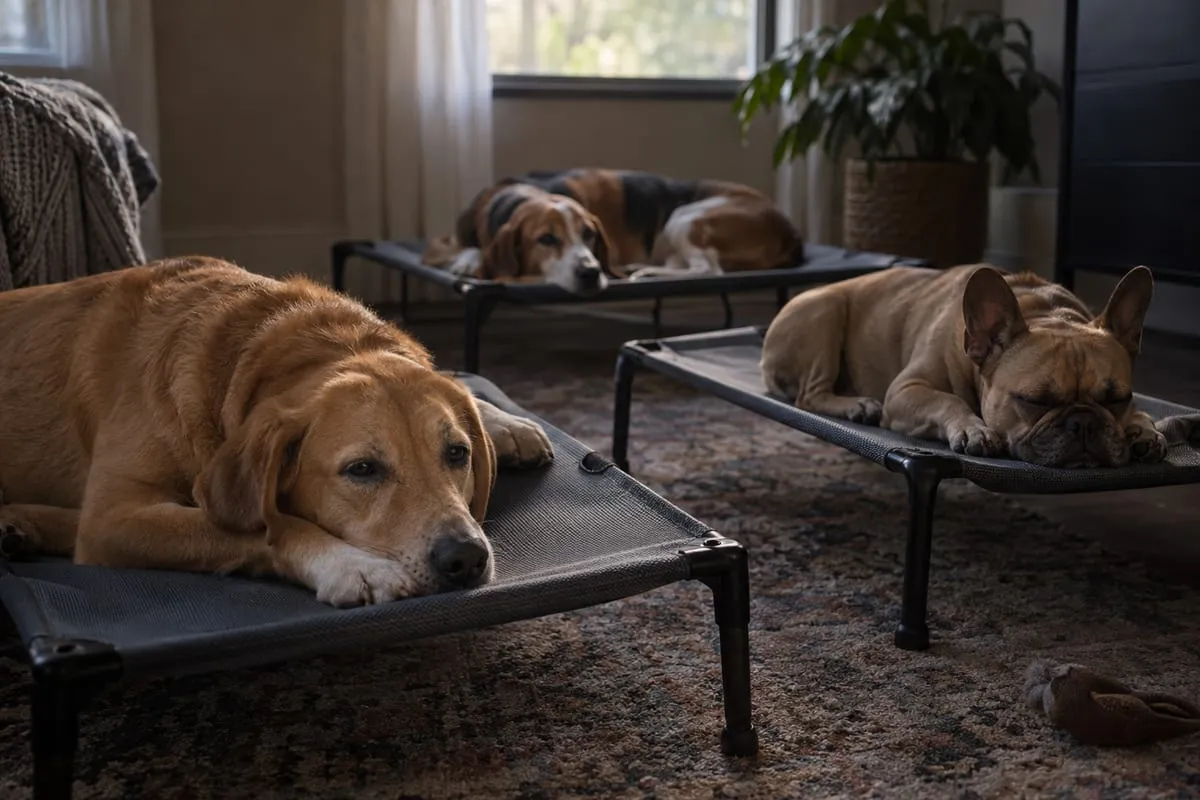
Rest breaks help, too. Tired dogs get cranky, and cranky dogs get into scuffles. A daycare that builds rest into the day, like a play/nap cycle, lowers the risk in every playgroup.
Is the Ratio the Most Important Safety Factor?
It matters, but it’s not the whole story. How staff are trained and how they supervise matter more than the headcount.
Good supervision looks like this:
- Eyes on the dogs. Staff are watching the group, not their phones or the front desk.
- Trained in dog body language. They can spot stress signals like stiffening, lip licking or a tucked tail, the kind the AKC lists in its guide to signs a dog is stressed, and step in before play tips into a fight.
- Calm interrupts. They break up overheated play early with a redirect or a short break, not by shouting.
- Known dogs. Every dog went through a screening such as a daycare temperament test before joining a group.
Training is where the real difference shows. At Park Your Paws, every team member receives formal dog handler training from Dog Handler Academy, an industry-recognized training program.
What Questions Should I Ask a Daycare About Supervision?
Ask how they staff and split groups, not just for a number. The AKC’s guide to choosing a doggy daycare suggests asking about play structure, rest areas and how they’d tell you about a change in your dog’s behavior. Here’s a fuller list:
- How are playgroups split? By size, play style, energy, or one mixed group?
- Who watches the dogs, and how are they trained? Ask whether staff get formal dog handler training, and from where.
- Is someone always in the room with the dogs? Including during staff breaks and shift changes?
- How do you build rest into the day?
- What happens when play gets too rough?
- How do you screen new dogs?
- How will you tell me if something happens?
A daycare that’s confident in its supervision will be happy to answer these. Vague answers are a sign to keep looking.
What Are the Red Flags?
A few things should make you pause, whatever ratio a daycare quotes:
- no screening or temperament test for new dogs;
- staff who can’t explain how groups are split;
- one person watching a large group while also answering phones or doing check-ins;
- no rest time, with dogs worked up for hours;
- a reluctance to answer questions about incidents.
Our guide to what to expect on your dog’s first day of daycare explains how a well-run day flows, which makes it easier to spot one that isn’t.
Summary
So, what’s a safe staff-to-dog ratio for daycare? Most daycares operate between 20 and 35 dogs per attendant, and some boutique daycares run smaller groups. The safest daycares match dogs well, adjust staffing to the group, give staff formal training in reading and handling dogs, and build rest into the day.
When you visit, ask how groups are split, who’s watching, and how staff are trained. Those answers tell you more than any single number. You can learn more about how our dog daycare runs its day, or read how daycare helps a dog’s social skills.
Frequently Asked Questions
How many dogs can one person safely watch?
It depends on the dogs, the room and the person’s training. Most daycares run about 20 to 35 dogs per attendant in group play, with more staff for large, young or high-energy groups.
Is there a law about dog daycare staffing where I live?
Maybe. A few states and cities set a number, while many places set none and leave staffing to each business. Check with your city or county about local licensing, and ask each daycare about its own policy.
Are smaller playgroups always safer?
Not always. A small group of poorly matched dogs can be riskier than a larger, well-matched group with trained, attentive staff. Matching, supervision and rest all matter.
Should a daycare tell me its ratio?
It’s fair to ask. Some daycares share a number; others explain how they staff each group instead. Either way, you should get a clear answer about who is watching your dog and how.