

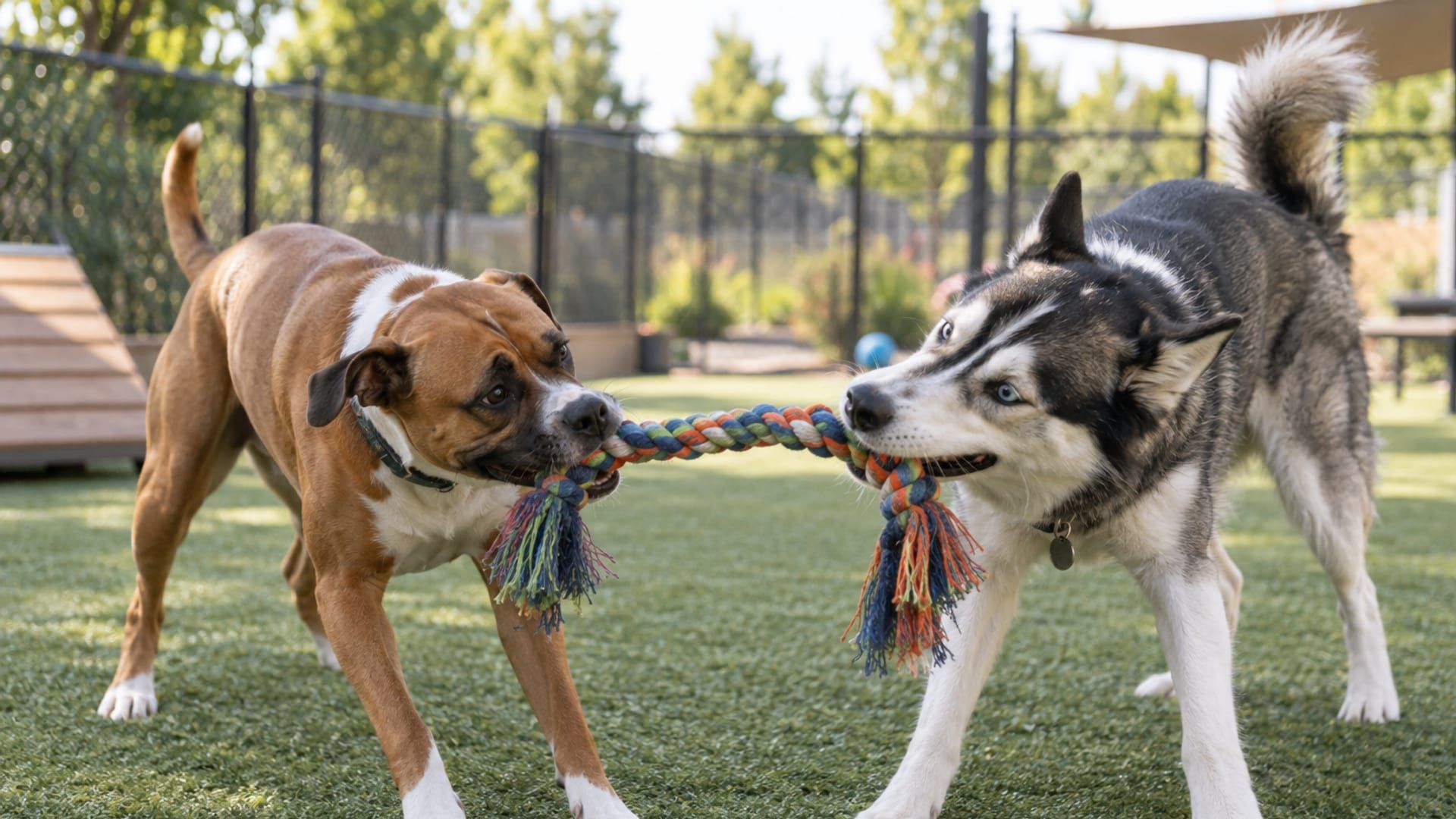
Dog daycare is usually the better fit for social, high-energy dogs who’d otherwise be home alone for most of the day, while a dog walker suits dogs who are older, less social, or just need a midday break and a potty stop. Plenty of families end up using both, depending on the week.
The choice gets real fast in August. Summer schedules wind down, people head back to the office, and a lot of dogs who had company all summer suddenly face eight or nine hours alone. That’s a big change for a dog, and it’s when we hear this question most.
Here’s how the two options compare, and how to tell which one your dog will thrive with.
Key Takeaways
- Daycare offers a full day of supervised play and company; a walker offers a shorter, one-on-one break.
- Social, energetic and young dogs often do best at daycare; seniors, shy dogs and dogs who don’t enjoy other dogs often do better with a walker.
- A walk breaks up the day but leaves your dog alone for the rest of it; daycare covers the whole workday.
- Every daycare should start with a temperament assessment to make sure group play is a good fit.
- Many owners mix the two: daycare a few days a week, a walker on the others.
Table of Contents
- What You Get With Dog Daycare
- What You Get With a Dog Walker
- Dog Daycare vs. Dog Walker at a Glance
- Which Dogs Thrive at Daycare?
- Which Dogs Do Better With a Walker?
- Can You Use Both?
- Questions to Ask Before You Choose
- Summary
- Frequently Asked Questions
What You Get With Dog Daycare
Daycare is a full day of care. Your dog spends the day with other dogs and trained staff, playing in supervised groups, with rest breaks built in.
The big advantages:
- Company all day. No long stretches alone waiting for the door to open.
- Exercise that actually tires them out. A few hours of off-leash play burns far more energy than most walks. (For more ways to tire out a busy dog, see ways to exercise your dog.)
- Socialization. Dogs practice reading other dogs, taking turns and settling down. We wrote more about this in level up your dog’s social skills at daycare.
- Supervision. Staff are watching the whole time, so issues get noticed early.
The trade-offs: you’re doing a drop-off and pick-up, and daycare isn’t for every dog. Some dogs find group play overwhelming, which is why a good daycare starts with an assessment. If you’re new to it, our post on what to expect when you join a dog daycare walks through the process.

What You Get With a Dog Walker
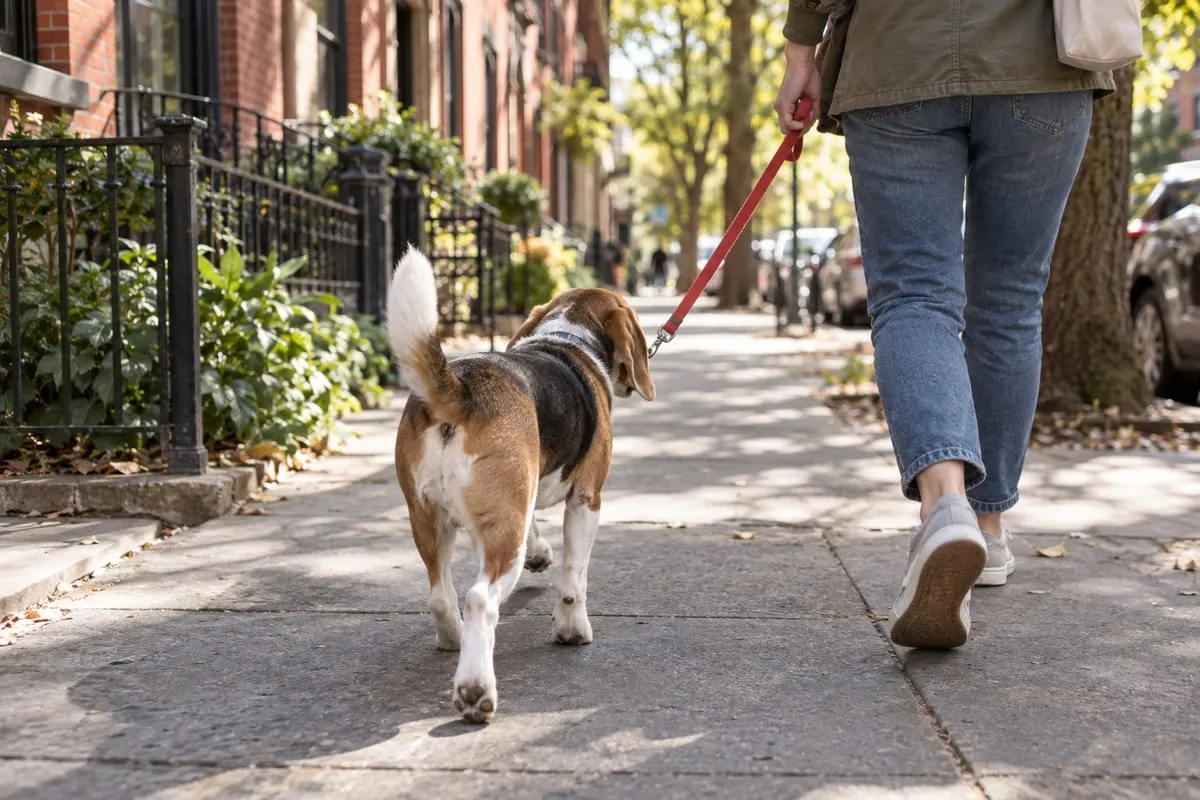
A dog walker comes to your home, usually once or twice a day, for a 20- to 60-minute walk. It’s simple and familiar for your dog.
The big advantages:
- One-on-one attention. Great for dogs who don’t love other dogs, or who get anxious in busy spaces.
- No commute for you. Your dog stays home, and you don’t need to fit drop-off into your morning.
- A potty break and a reset in the middle of a long day.
The trade-offs: a walk is a break, not a day. Your dog is still alone for most of the workday. And unless you hire a walker who does solo walks, some walk several dogs at once, which changes the experience. (If you’ve ever wrangled two leashes yourself, our tips for walking multiple dogs will feel familiar.)
Dog Daycare vs. Dog Walker at a Glance
| Dog daycare | Dog walker | |
|---|---|---|
| Time with your dog | Most of the workday | Usually 20 to 60 minutes |
| Exercise | Hours of play with rest breaks | One walk or a few short ones |
| Social time with dogs | Lots, in supervised group play | Little to none (unless group walks) |
| Time alone at home | Very little | Most of the day |
| Best for | Social, energetic, young dogs | Seniors, shy or dog-selective dogs |
| Logistics | Drop-off and pick-up | Walker needs home access |
Which Dogs Thrive at Daycare?
Daycare tends to be a great match for:
- Young, energetic dogs who come home from a walk still bouncing off the walls
- Social dogs who light up around other dogs
- Dogs who struggle being alone for long stretches (though true separation anxiety needs its own plan)
- Puppies past their vaccinations who are building social skills
The tell we see most often: a dog who’s chewing, barking or getting into trouble at home because they’re bored. A full day of play usually means a calm, sleepy evening.
Which Dogs Do Better With a Walker?
A dog walker is often the better choice for:
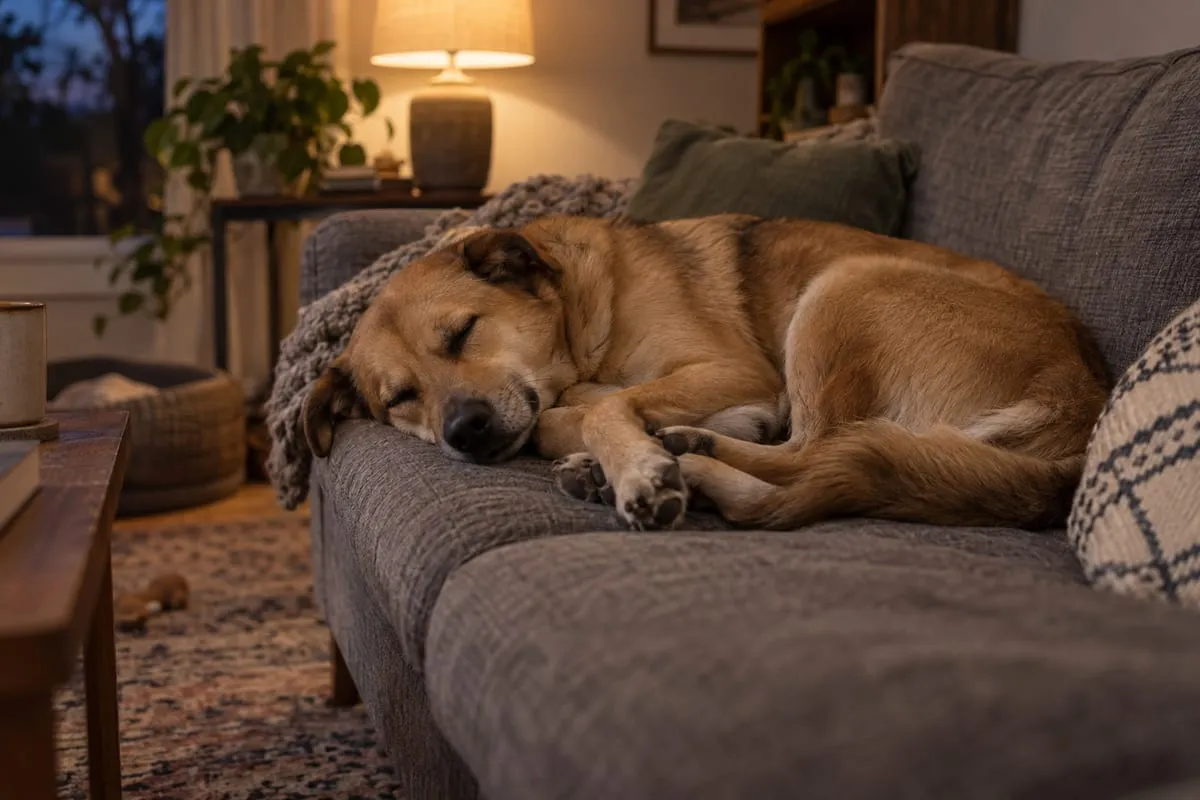
- Senior dogs who need gentle movement and a potty break more than hours of play
- Shy or anxious dogs who find groups stressful
- Dog-selective dogs who prefer people to other dogs
- Dogs with medical needs that make group play a bad idea
None of that is a knock on those dogs. Honestly, some dogs are introverts, and that’s fine.
Can You Use Both?
Absolutely, and lots of people do. A common pattern is daycare two or three days a week for a big play day, with a walker on the other days to break things up. That gives your dog variety and keeps costs in check.
It also helps on weeks when your schedule changes. Long day at the office? Daycare. Working from home but stuck on calls? A midday walk.
Questions to Ask Before You Choose
Whichever way you go, ask a few questions first:
For a daycare:
- Do you require a temperament assessment before the first day?
- How are playgroups organized and supervised?
- What’s the staff-to-dog ratio, and what training do staff have?
- What vaccinations are required?
- How do dogs rest during the day?
For a dog walker:
- Are you insured and bonded?
- Is the walk solo or with other dogs?
- What happens if you’re sick or running late?
- How will you let me know the walk happened?
If daycare sounds like the right fit, the first step at Park Your Paws is a temperament test, so we can get to know your dog before their first full day. You can learn more on our dog daycare page.
Summary
When it comes down to dog daycare vs. dog walker, think about your dog first. Social, energetic dogs facing long days alone usually do best at daycare. Seniors, shy dogs and dogs who prefer people tend to do better with a walker. And if your dog is somewhere in between, mixing the two is a perfectly good answer.
Frequently Asked Questions
Is daycare or a dog walker better for a puppy?
Both can work. Young puppies need frequent potty breaks, so a midday walker helps early on. Once your puppy is old enough and vaccinated, daycare adds valuable socialization. Ask your vet what’s right for your puppy’s age.
How long should a dog be left alone?
It depends on age, health and temperament, but most adult dogs shouldn’t be left alone for a full workday without a break. Puppies and seniors need breaks even more often.
Will daycare make my dog tired?
Usually, yes. Most dogs come home ready for a long nap. If your dog seems exhausted for days afterward, try fewer days a week or ask staff about extra rest time.
What if my dog doesn’t pass a daycare temperament test?
That’s not a failure. It just means group play isn’t the best fit right now. A dog walker, training or a slower introduction may be better options, and staff can usually suggest next steps.