

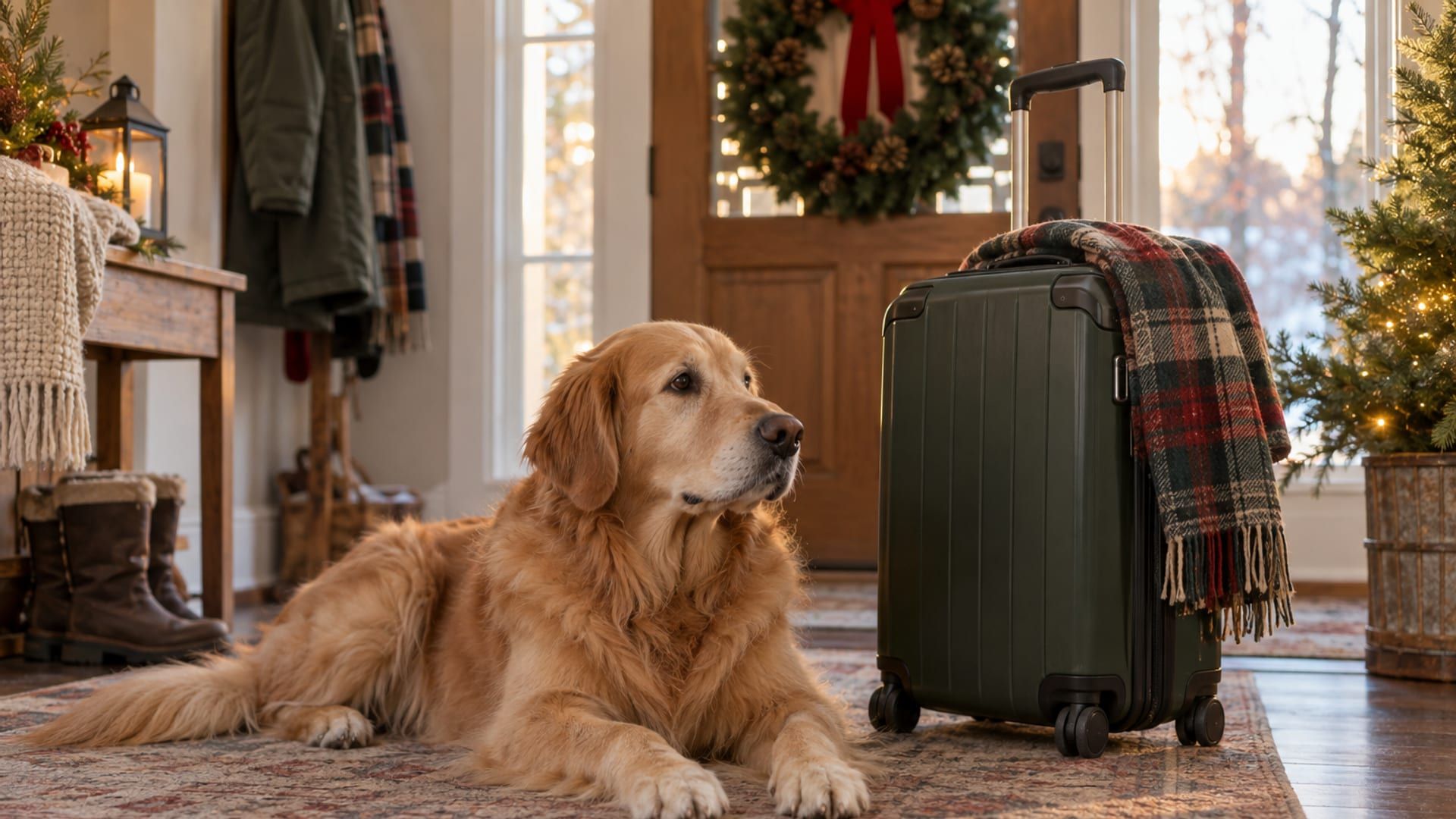
Book holiday dog boarding as early as you can, ideally as soon as your travel dates are set, because Thanksgiving, Christmas and New Year’s are the busiest weeks of the year for boarding. Then use the weeks before your trip to update vaccines, do a trial day, and pack the things that make your dog feel at home.
Every fall we see the same pattern. Owners book flights in October, remember the dog in December, and then find their usual spot is full. A little planning now saves a lot of scrambling later, and it makes the stay easier on your pup, too.
Here’s a simple timeline for holiday dog boarding, from booking to pickup.
Key Takeaways
- Holiday weeks are the busiest time for dog boarding, so book as soon as you know your travel dates.
- Check the facility’s vaccine requirements early, since some vaccines need to be given days or weeks before a stay.
- A trial day or short stay before the holiday helps your dog learn the place, the people and the routine.
- Pack your dog’s regular food, medications and bedding, and write down feeding and medication instructions.
- Keep drop-off short and upbeat; long goodbyes tend to make dogs more anxious, not less.
Table of Contents
- When Should You Book Holiday Dog Boarding?
- Check Vaccines and Health Records Early
- Do a Trial Day or Short Stay First
- What to Pack for a Holiday Boarding Stay
- Write Down the Details Staff Need
- How to Make Drop-Off Easier
- Coming Home After the Holidays
- A Holiday Boarding Timeline
- Summary
- Frequently Asked Questions
When Should You Book Holiday Dog Boarding?
As soon as your plans are firm. The weeks around Thanksgiving, Christmas and New Year’s are when nearly everyone travels at once, so boarding spots go quickly. Popular dates (the Wednesday before Thanksgiving and the days right around Christmas) can fill up well ahead of time.
A few tips for getting the dates you need:
- Book the whole trip, not just the holiday itself. Include the night before an early flight and the day you get back.
- Ask about deposits and cancellation rules. Many facilities take a deposit for busy dates. At Park Your Paws, boarding reservations need a deposit, which comes off your bill at pickup. You can read why on our dog boarding page.
- Get on a waitlist if you’re late. Plans change, and spots do open up.
Check Vaccines and Health Records Early
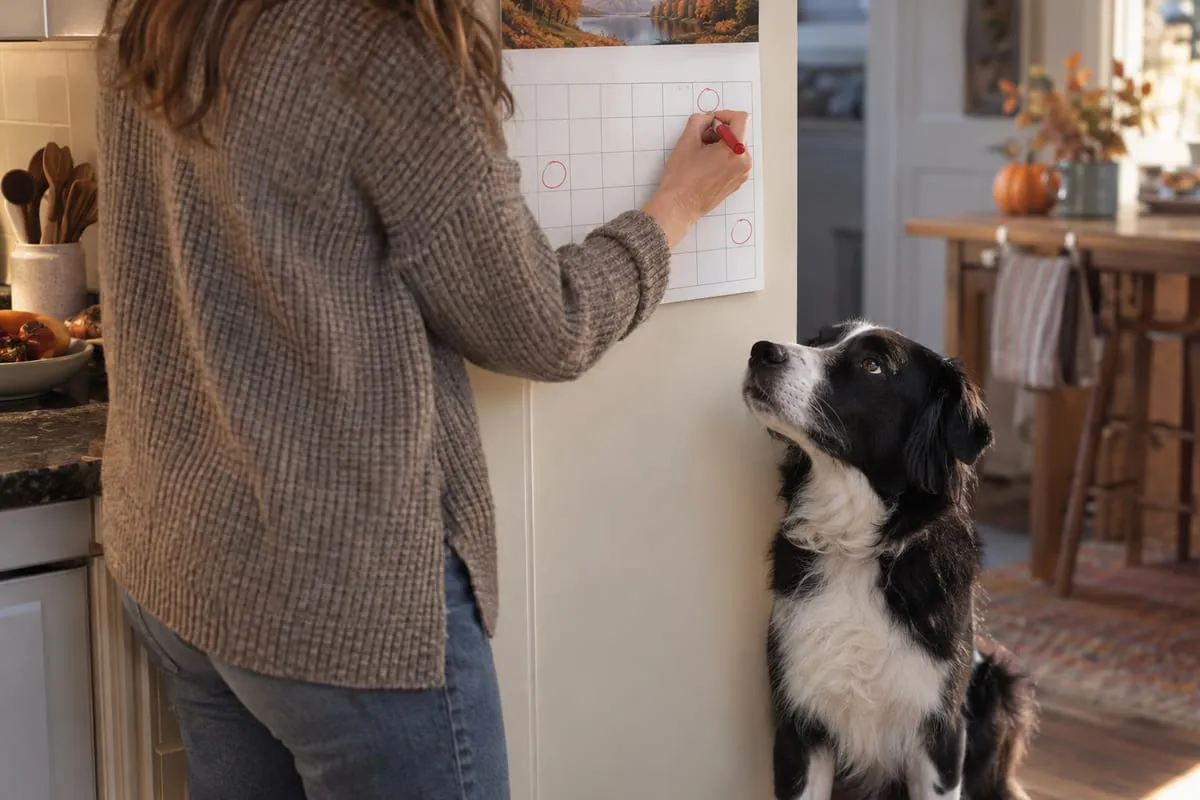
This is the step that trips people up the most. According to VCA Animal Hospitals, rabies, distemper, parvovirus and Bordetella (kennel cough) vaccines are almost universally required for boarding, and most facilities want written proof from your vet.
Here’s the catch: some vaccines need time to work, and facilities often set a minimum number of days between the shot and the stay. Your vet’s calendar also gets busy in December. So:
- Look up your boarding facility’s requirements now.
- Check your dog’s records for anything due or overdue.
- Book a vet visit with a few weeks of buffer, and ask how far ahead each vaccine should be given.
- Send the records to the facility before the stay, not at drop-off.
For reference, Park Your Paws asks that dogs be current on Rabies, Distemper (DHLP) and Bordetella, with Canine Influenza preferred, or have valid titer testing. Every facility is different, so always check with the one you’re using.
Do a Trial Day or Short Stay First
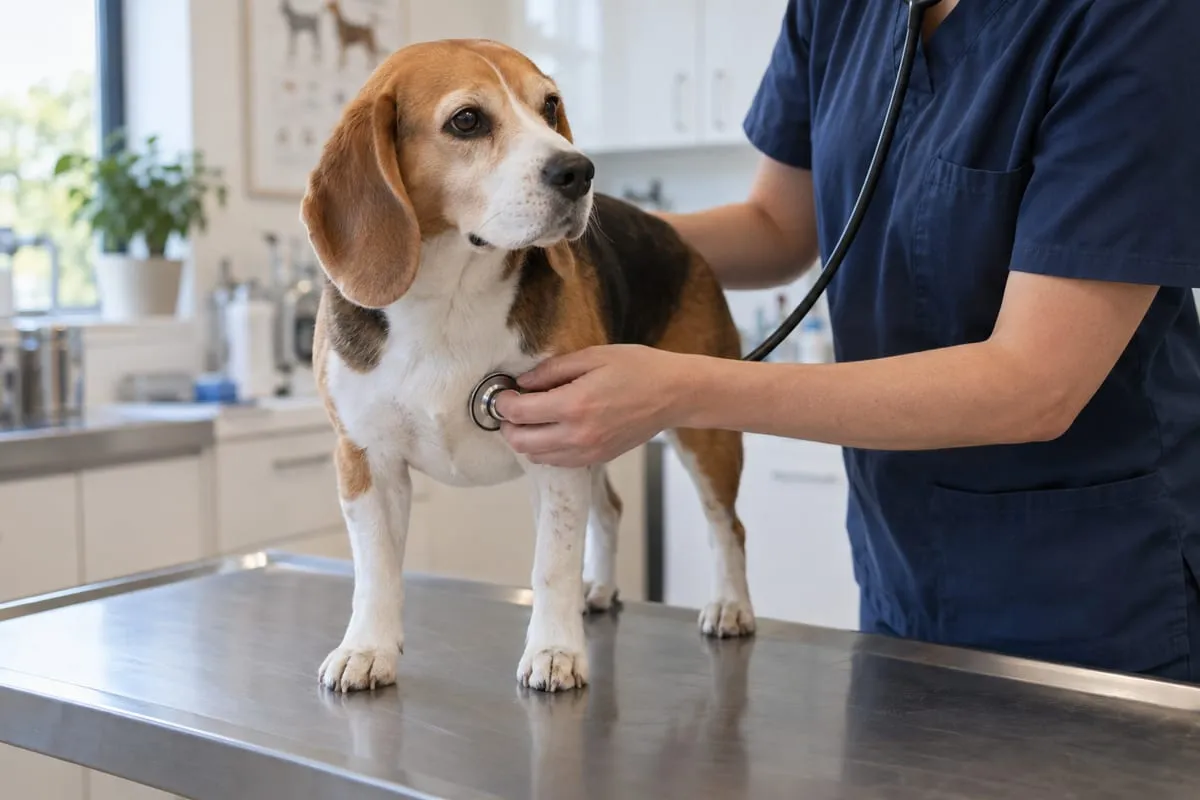
A first-ever overnight on Christmas Eve is a lot for any dog: new place, new people, new dogs, and you’re gone. VCA recommends boarding for a short period before a longer trip, and we’d agree. A practice run lets your dog learn that you always come back.
At Park Your Paws, every dog spends at least one full day at dog daycare before boarding, so we can make sure they enjoy the environment. If your dog is new to daycare, our guide on what to expect when you join a dog daycare walks through the first visits.
Our honest take: if your dog has never stayed anywhere overnight, try a single night a few weeks before your trip. It’s the best way to spot problems (a picky eater, a nervous sleeper) while there’s still time to adjust.
What to Pack for a Holiday Boarding Stay
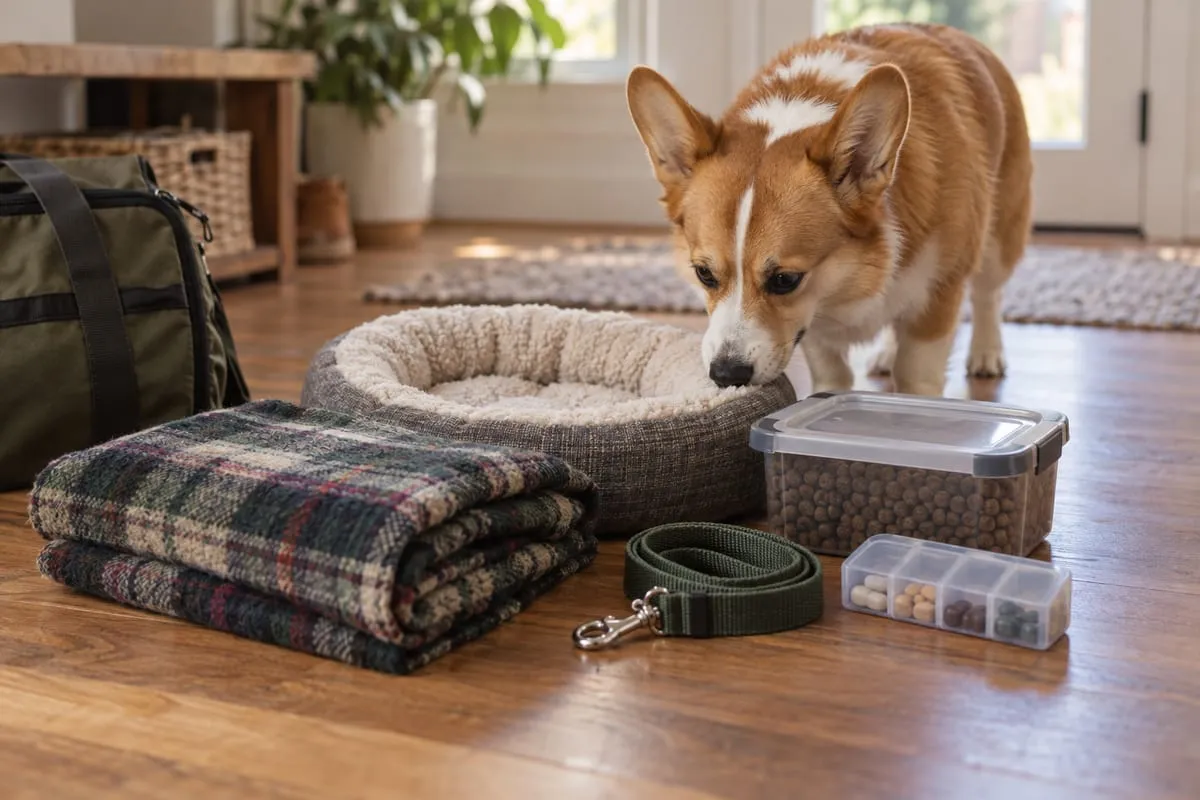
Keep it simple and familiar. Routines and surroundings that feel like home are what help most. Our full list is in 5 things to pack for your dog’s boarding stay, and you can download our free dog boarding checklist to tick things off.
The short version:
- Their regular food, plus a little extra. Holiday travel delays happen. Switching food suddenly can upset a dog’s stomach, so skip the new bag of fancy holiday kibble.
- Medications and supplements, in their original containers, with clear labels.
- Bedding that smells like home. A worn blanket or bed helps many dogs settle at night.
- A collar with current ID. Make sure microchip details are up to date, too.
One thing we ask owners to leave at home: toys. In a group setting, toys from home can cause guarding and squabbles between dogs, so Park Your Paws doesn’t accept them. Other facilities have their own rules, so ask.
Write Down the Details Staff Need
Drop-off during the holidays is busy, and you’ll be thinking about your flight. Write everything down ahead of time so nothing gets lost:
- Feeding amounts and times
- Medication names, doses and schedule (exactly as your vet prescribed)
- Allergies, health conditions and recent changes
- Your contact details, plus a backup person who can make decisions
- Your vet’s name and phone number, and permission for emergency care
VCA also suggests leaving written authorization for emergency treatment and a second contact in case you can’t be reached. It’s one of those things you hope nobody needs, but it matters a lot if they do.
How to Make Drop-Off Easier
Dogs read us really well. If you’re anxious and drawn out at the door, they pick up on it.
- Exercise first. A good walk or play session before drop-off takes the edge off. Our post on ways to exercise your dog has ideas if you’re short on time.
- Keep goodbyes short and cheerful. A quick pat and a confident “see you soon” works better than a long, emotional farewell.
- Arrive with time to spare. Rushing makes everyone tense, including your dog.
Most dogs walk in a little unsure and are playing with their new friends within the hour. Some take longer, and that’s normal. VCA notes that a lower appetite at first is common and usually improves as dogs get used to boarding.
Coming Home After the Holidays
Expect a tired dog. A boarding stay with all-day play is a lot more activity than most dogs get at home, so plenty of them sleep hard for a day or two. That’s a good sign; it means they had a busy, social stay.
A few other things are normal: extra thirst, a bit of clinginess, or a few “smells of the day” coming home with them. Many facilities (Park Your Paws included) offer exit baths so your pup comes home fresh. If your dog seems unwell rather than just tired, with coughing, vomiting, diarrhea or not eating, call your vet.
Once you’re home, ease back into the routine. Keep them away from the holiday leftovers, too. According to the ASPCA, fatty, sweet and spicy foods as well as turkey or chicken bones can all be dangerous to pets.
A Holiday Boarding Timeline
| When | What to do |
|---|---|
| As soon as plans are set | Book boarding for every night you’ll be away, and pay any deposit |
| 4 to 6 weeks before | Check vaccine requirements and book a vet visit if anything is due |
| 2 to 4 weeks before | Do a trial day or one-night stay |
| 1 week before | Send vaccine records, confirm dates, buy extra food |
| The day before | Pack food, meds and bedding; write out instructions |
| Drop-off day | Exercise, keep goodbyes short, leave contact details |
If you’re in Columbus, our Columbus North and Columbus Downtown locations both offer overnight boarding with full-day supervised play. New pups start with a temperament test.
Summary
Holiday dog boarding goes smoothly when you start early. Book as soon as your plans are set, check vaccine requirements weeks ahead, and give your dog a trial day or short stay before the big trip. Pack familiar food, meds and bedding, write down everything staff need to know, and keep drop-off short and upbeat. Then enjoy your holiday knowing your pup is in good hands.
Frequently Asked Questions
How far in advance should I book dog boarding for Christmas?
As early as you can, ideally as soon as you know your travel dates. Christmas and New Year’s are the busiest boarding weeks of the year, and many facilities fill up well before December.
Is boarding stressful for dogs?
It can be at first, especially for dogs who have never stayed away from home. A trial day or short stay beforehand, familiar bedding and a routine that matches home all help. Most dogs settle in within a day or so.
Should I bring my dog’s toys to boarding?
It depends on the facility. In group play settings, toys from home can lead to guarding between dogs, so many places (including Park Your Paws) ask you to leave them at home. Bedding is usually welcome.
What vaccines does my dog need for boarding?
Most facilities require rabies, distemper/parvovirus and Bordetella (kennel cough), and some also ask for canine influenza. Check your facility’s list and talk to your vet about timing, since some vaccines need to be given days or weeks before the stay.
Can my dog have holiday treats while boarding?
It’s best to stick to their normal food during a stay. Sudden changes in diet can cause stomach upset, and rich holiday foods can be dangerous for dogs. If your dog gets a special treat at home, ask the facility before packing it.