

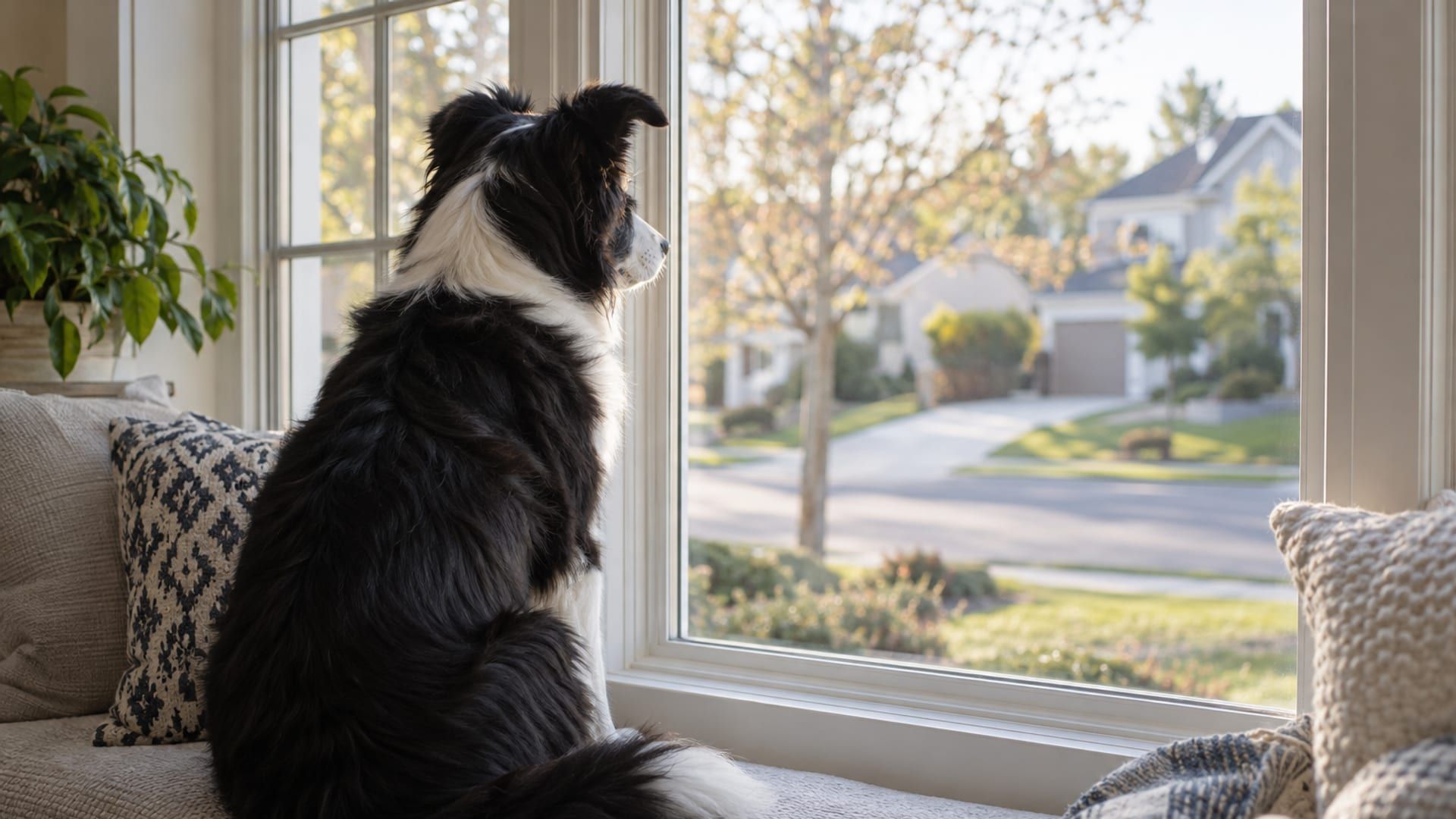
Separation anxiety in dogs is real distress, not bad behavior: a dog who barks, chews, has accidents or tries to escape only when left alone is often panicking, not misbehaving. The good news is that most dogs improve with a gradual, patient plan that teaches them being alone is safe.
Late summer is when a lot of owners first notice it. Kids go back to school, adults go back to the office, and a dog who had company all day in July is suddenly alone for hours in August. That kind of abrupt change is one of the most common triggers.
Here’s how to recognize separation anxiety, what actually helps, and when to bring in a professional.
Key Takeaways
- Separation anxiety shows up only when a dog is alone or about to be left: barking, destruction near doors, accidents, pacing or escape attempts.
- Sudden schedule changes, a move, or losing a family member are common triggers.
- Never punish anxiety-driven behavior; it’s a stress response, and punishment makes it worse.
- Gradual, very short practice absences paired with something your dog loves are the core of treatment.
- Moderate to severe cases need your vet and often a veterinary behaviorist.
Table of Contents
- What Is Separation Anxiety in Dogs?
- Signs of Separation Anxiety
- What Triggers Separation Anxiety?
- How to Help a Dog With Separation Anxiety
- What Doesn’t Help
- When to Call Your Vet or a Behaviorist
- Summary
- Frequently Asked Questions
What Is Separation Anxiety in Dogs?
Separation anxiety is a stress response to being left alone or separated from the people a dog is attached to. It’s different from boredom. A bored dog gets into things because they have nothing better to do. An anxious dog is genuinely upset, and the behavior is their way of coping.
The ASPCA notes that the exact cause isn’t known, but it’s seen more often in dogs adopted from shelters, and the loss of an important person or group in a dog’s life can contribute.
Signs of Separation Anxiety
According to the ASPCA, the key is that these behaviors happen when the dog is alone, or when they can tell you’re about to leave:
- Barking, howling or whining after you leave
- Chewing or digging, especially around doors and windows
- House-training accidents from a dog who’s otherwise reliable
- Pacing in a fixed pattern
- Escape attempts, which can be intense enough to cause injury
- Signs of distress as you get ready to go: pacing, panting, whining or following you from room to room

That “guilty” look when you walk in? It isn’t guilt. Dogs read our body language and react to it. Your dog isn’t sorry about the cushion; they were stressed while you were gone.
Rule Out Other Causes First
Not every accident or chewed shoe means separation anxiety. Incomplete house-training, excitement urination, marking, boredom and medical issues like a urinary tract infection can look similar. A vet visit is a smart first step, especially if accidents are new.
A pet camera helps here too. Watching what your dog actually does after you leave tells you a lot.
What Triggers Separation Anxiety?
The ASPCA lists several common triggers:
- A change in schedule, especially an abrupt jump in how long the dog is alone
- A move to a new home
- A change in family, such as a new guardian or someone moving out
- The loss of a household member, human or animal
This is why late summer is a hot spot. Dogs adapt to whatever “normal” is, and a summer of company followed by a sudden full-time absence is a big shift.
If you know a change is coming, start easing your dog into it a few weeks early with short practice absences.
How to Help a Dog With Separation Anxiety
Treatment is about teaching your dog that being alone is safe and predictable. It takes patience, and progress isn’t always a straight line.
Make Being Alone Predictably Good
Pair your departures with something your dog loves and only gets when you leave. The ASPCA suggests a food puzzle toy, like a stuffed rubber toy, given as you head out and picked up when you return.
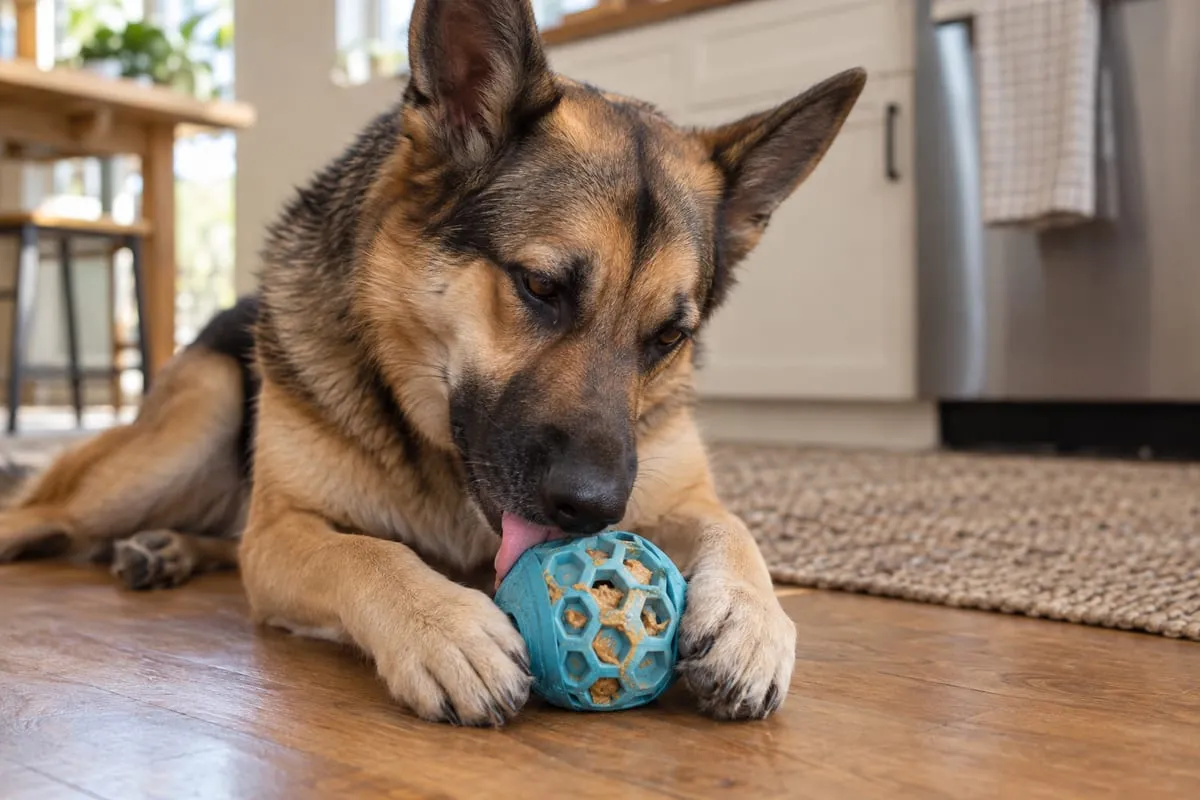
Freezing a stuffed toy makes it last longer, and slow feeders can stretch out mealtime the same way. Note that a very anxious dog may not eat while you’re gone, which is useful information in itself.
A tired dog is also a calmer dog. A good walk or play session before you leave helps. Our post on ways to exercise your dog has plenty of ideas.
Practice Short, Graduated Departures
Start with absences so short your dog doesn’t have time to get upset: step outside for a few seconds, then come back. Gradually lengthen the time over days and weeks, staying below the point where your dog shows stress.
If you see panting, drooling, trembling or pacing, you’ve gone too far too fast. Back up to a shorter time and build again more slowly.
Take the Sting Out of Departure Cues
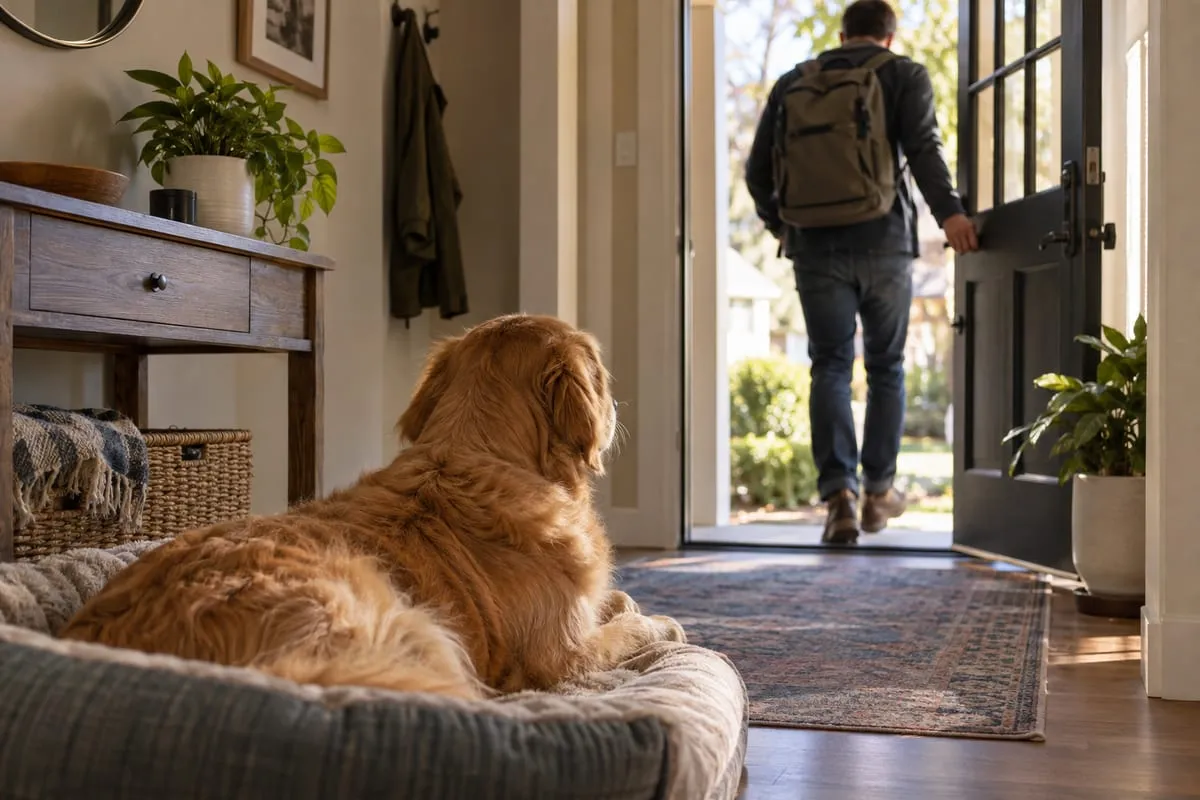
Many dogs start worrying the moment you pick up your keys or put on your shoes. Practice those cues without leaving: grab your keys and sit down, put on your coat and make dinner. Over many repetitions, the cues stop predicting that you’re about to disappear.
Keep Hellos and Goodbyes Low-Key
Big, emotional goodbyes and over-the-top greetings make your comings and goings feel like a bigger deal. Keep both calm. When you get home, wait for your dog to settle before giving lots of attention.
While you’re working on it, try not to leave your dog alone longer than they can handle. A friend, a sitter, bringing your dog to work, or daycare can bridge the gap while you train.
What Doesn’t Help
- Punishment. The ASPCA is clear on this: don’t scold or punish your dog for anxious behavior. It’s a stress response, not disobedience, and punishment can make the anxiety worse.
- Rushing. Jumping from five minutes to five hours undoes progress.
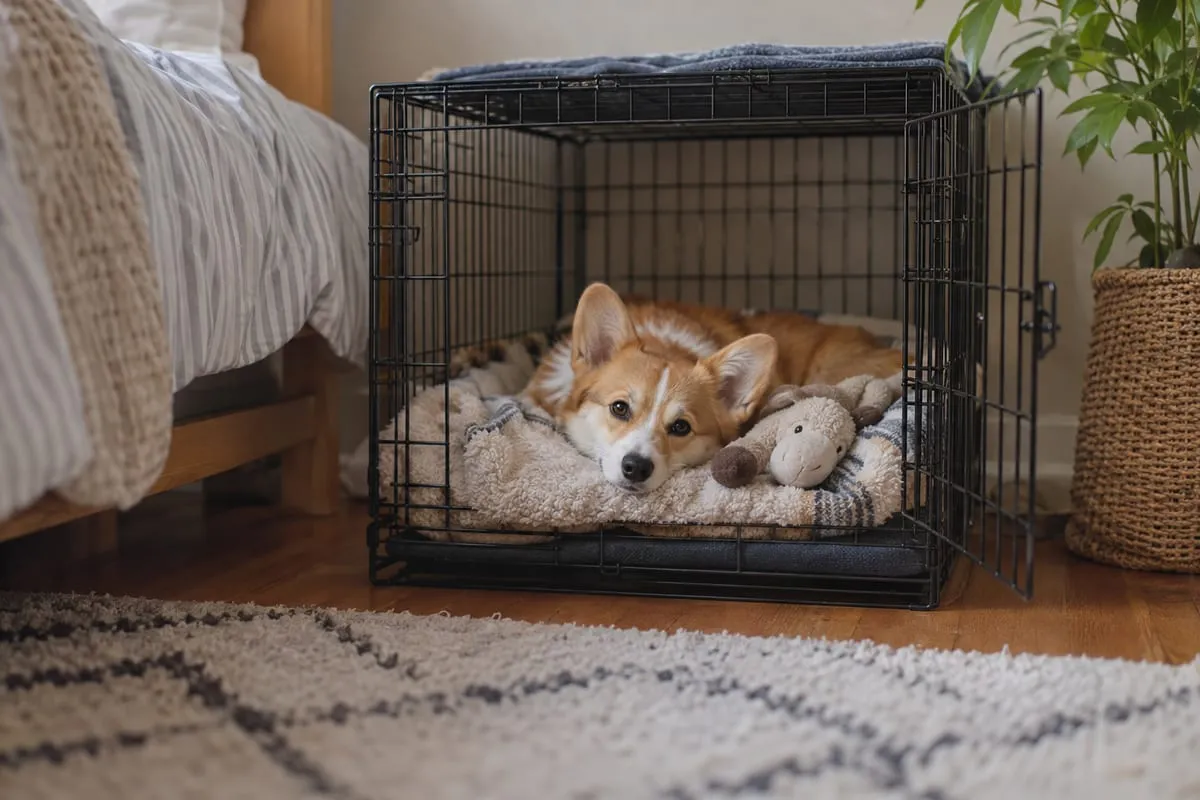
- Assuming a crate will fix it. Crates help some dogs feel secure, but others panic in them. If your dog shows distress in a crate, try a gated room instead.
When to Call Your Vet or a Behaviorist
Start with your vet to rule out medical causes. For moderate or severe separation anxiety, especially if your dog is hurting themselves trying to escape, the ASPCA recommends working with a certified applied animal behaviorist or a board-certified veterinary behaviorist.
Your vet may also discuss medication. It isn’t a shortcut, but for severe cases it can lower anxiety enough for training to work. Never give your dog any medication without your vet’s guidance.
At daycare, we often meet dogs whose owners started bringing them in to cover the hours they can’t be alone yet. For a social dog, a day of company and play can be a real help while you work on the bigger plan. You can learn more on our dog daycare page.
Summary
Separation anxiety in dogs is stress, not spite. Watch for problems that happen only when your dog is alone, rule out medical causes, and build confidence with short, positive practice absences that get longer very gradually. Skip punishment, keep departures and arrivals calm, and bring in your vet or a behaviorist for anything more than mild.
For more on building a confident, social dog, read about how daycare can level up your dog’s social skills.
Frequently Asked Questions
Can daycare help with separation anxiety?
For social dogs, it can help by reducing the time they spend alone while you work on training. Our guide to what to expect when you join a dog daycare explains how dogs get started. It’s not a cure on its own, and dogs who are anxious in new environments may need a slower introduction.
Should I crate a dog with separation anxiety?
It depends on the dog. Some feel safer in a crate; others panic and can hurt themselves trying to get out. Watch how your dog behaves in the crate, and use a gated room if they seem distressed.
Will getting a second dog fix separation anxiety?
Not reliably. Many dogs with separation anxiety are attached to their people specifically, so another dog may not help, and you’d then have two dogs to manage. Talk to a professional first.
How long does it take to treat separation anxiety?
It varies. Mild cases can improve in a few weeks, while severe cases can take months of consistent work. Steady, gradual progress matters more than speed.