
Daycare and Boarding at the Same Place: Why It Helps Your Dog

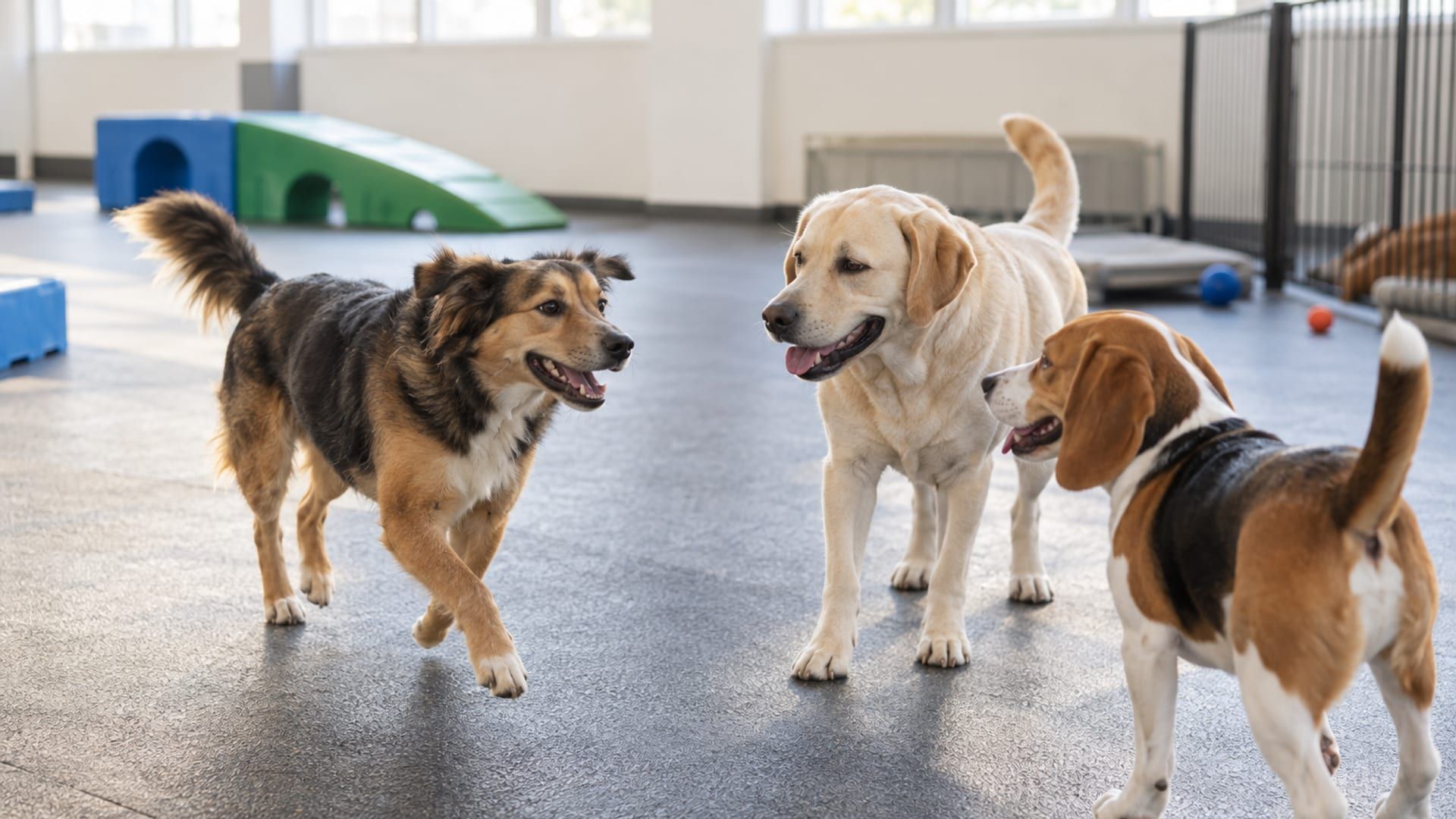
Yes, if you can, use daycare and boarding at the same place. A dog who already goes to daycare where they board walks in on the first night knowing the building, the people and the other dogs, so the stay feels like a long daycare day instead of a strange new place.
That matters most at facilities where boarders spend the day playing with the daycare pack, as they do at Park Your Paws. Your dog isn’t just sleeping somewhere familiar. They’re spending the day with friends they already know.
Here’s why familiarity makes such a difference, what it looks like in practice, and how to set your dog up for an easy first stay.
Key Takeaways
- Dogs are most stressed in the first couple of days in a new place, so a familiar facility removes the hardest part of boarding.
- When boarders play with the daycare pack during the day, a daycare regular already knows their playmates and the routine.
- Staff who know your dog from daycare can spot when something is off, because they already know what normal looks like for your pup.
- Booking a few daycare days before a first stay is the simplest way to make boarding easier.
- Daycare first is a requirement at many facilities, including Park Your Paws, where every dog spends at least one full day at daycare before boarding.
Table of Contents
- Why a Familiar Place Matters on the First Night
- What Daycare Regulars Already Know When They Board
- Why It Matters More When Boarders Join the Daycare Pack
- How a Daycare History Helps Staff Care for Your Dog
- How to Prepare a Dog Who Has Never Been to Daycare
- When Daycare and Boarding at the Same Place May Not Fit
- Summary
- Frequently Asked Questions
Why a Familiar Place Matters on the First Night
Dogs find new places stressful, and the first couple of days are the hardest. A familiar place takes most of that stress away before the stay even starts.
Researchers at Utrecht University measured this in dogs moved into a shelter. The dogs had higher levels of the stress hormone cortisol than pet dogs living at home, especially during their first two days, and many of them slept poorly for several nights. The researchers concluded that dogs need at least two days, and often longer, to adjust to new surroundings. A shelter isn’t a boarding facility, but the finding is the same one boarding staff see: the newness itself is the hard part.
Now think about a typical holiday stay. It’s often three or four nights. If a dog spends the first two of those just getting used to the place, half the trip is gone before they relax.
A daycare regular skips that adjustment period. They already did it, one happy daycare day at a time, weeks or months ago.

What Daycare Regulars Already Know When They Board
A dog who goes to daycare where they board arrives already knowing three things a new dog has to learn from scratch: the place, the people and the other dogs.
The Building and the Routine
The smells, the sounds, the front door, the play floor, where the water bowls are. To a daycare regular, none of it is new. They know that play comes in waves, that there are naps in between, and that the day has a rhythm they can count on.
Boarding adds only one new piece: sleeping there. At Park Your Paws, boarding dogs settle into their own crate or private suite at night, and staff check on every dog before lights out. Then the next morning starts the way every daycare day does, with breakfast and a play session with the pack. Our dog boarding page walks through a full day.
The Staff
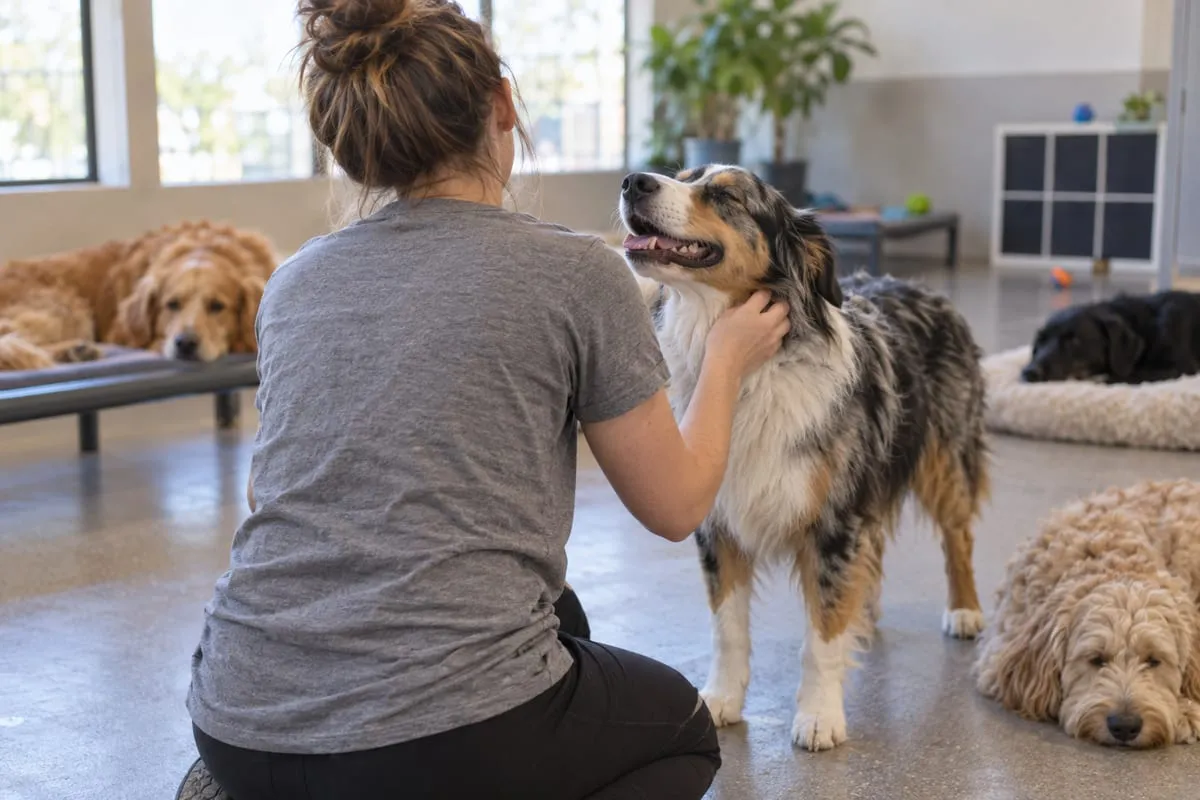
Dogs build relationships with the people who care for them. A dog who already gets greeted by name, knows which staff member hands out the best ear scratches, and trusts the people walking them between play and rest has a big head start.
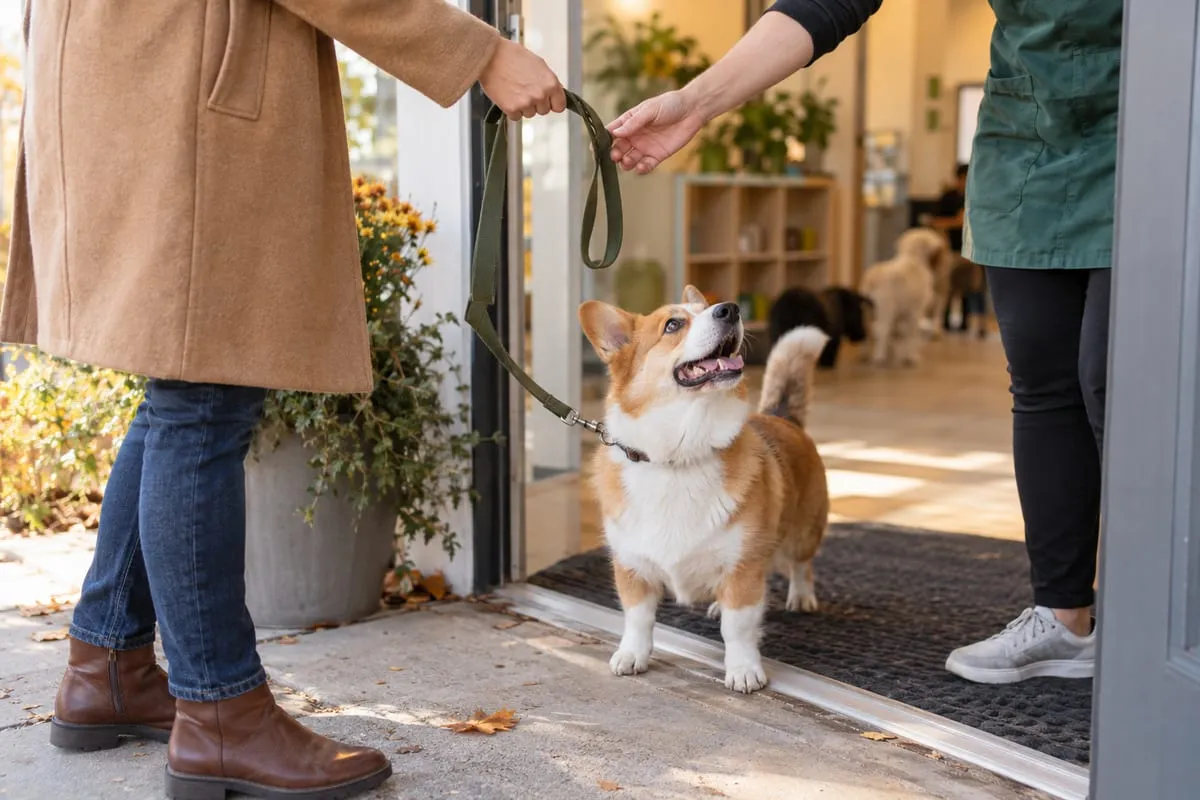
That trust matters most at drop-off. A dog handed to a familiar face usually walks in with their tail up. A dog handed to a stranger often needs a while.
The Pack
This is the one owners tend to overlook. A daycare dog doesn’t just know the building. They have friends.
We see it all the time: a regular boarder comes in for a stay, spots a favorite playmate, and forgets to say goodbye. It’s a little humbling for the owner and a great sign for the dog.

Why It Matters More When Boarders Join the Daycare Pack
Not every boarding facility works the same way. In a traditional kennel, a boarding dog spends most of the day in a run with a few short trips outside. In that setup, knowing other dogs doesn’t change much.
At facilities where boarders play with the daycare pack all day, it changes everything. Your dog’s whole day is social. So the question isn’t only “will my dog sleep well?” It’s also “will my dog be comfortable spending eight or more hours with this group?”
A daycare regular has already answered that question. They know how the group plays, they’ve found their favorite buddies, and the staff have seen how they fit in. At Park Your Paws, that’s exactly how boarding works: overnight guests get the same Fun All Day play as the rest of the pack, with as-needed downtime instead of long hours in a kennel.
Our honest take: if a facility offers all-day group play for boarders, daycare first isn’t just nice to have. It’s the best way to know your dog will enjoy their stay. If your dog is newer to group play, our post on how often your dog should go to daycare can help you pick a rhythm before a trip.
How a Daycare History Helps Staff Care for Your Dog
Staff who know your dog from daycare can tell when something is off. They know what normal looks like for your pup.
Say your dog usually bounces between playmates all morning, but on the second day of a stay, they’re hanging back near the gate. A team that has watched them for months notices that quickly. A team meeting them for the first time might not, because they have nothing to compare it to.
That baseline also helps with the small stuff:
- Eating: Some dogs eat a little less on their first night anywhere. Staff who know your dog’s normal appetite can tell a nervous night from a real problem.
- Play style: They already know which dogs your pup plays well with and who they’d rather avoid.
- Rest: They know whether your dog naps hard after an hour of play or needs a nudge to settle.
- Quirks: The dog who hates the vacuum, loves one particular corner, or needs a slow introduction to big dogs. It’s all known before the first night.
If your dog has a history of separation anxiety, that familiarity is even more valuable. The staff can lean on routines your dog already trusts instead of starting from zero.
How to Prepare a Dog Who Has Never Been to Daycare
If your dog has never been to daycare and a trip is coming up, start with a few daycare days at the place you plan to board. Give yourself a few weeks if you can.
Here’s a simple plan:
- Start with the intake steps. Most daycares begin with a temperament test or meet-and-greet. Ours is a short visit, about 20 to 40 minutes, with staged introductions to the group. Our guide to what a daycare temperament test looks like explains each step.
- Book a few daycare days. Space them out over a couple of weeks so your dog learns that you always come back. The AKC also suggests a short trial stay before a longer trip, and a few daycare days do much of the same job.
- Try one night if you can. For a dog who has never slept away from home, a single night before a long trip is the best way to spot a picky eater or a nervous sleeper while there’s still time to adjust. VCA Animal Hospitals gives the same advice about boarding for a short period first.
- Pack the familiar stuff. Their regular food and bedding that smells like home. Our list of what to pack for your dog’s boarding stay covers the rest, and you can download our free dog boarding checklist.
At Park Your Paws, the daycare step isn’t optional. Every dog spends at least one full day at dog daycare before their first overnight stay, so we know they’re a good match for the pack. We also don’t offer facility tours, because they disrupt the playgroups. Honestly, a daycare day tells you far more than a tour would: you see how your dog actually does in the group, and you pick up a tired, happy pup.
If you’re planning ahead for a holiday trip, our post on holiday dog boarding has a full booking and prep timeline.
When Daycare and Boarding at the Same Place May Not Fit
For most dogs, daycare where they board is the easiest path. A few dogs are better served another way.
- Dogs who don’t enjoy group play. Some dogs are happier with people than with other dogs. If daycare stresses your dog, a facility built around all-day group play may not be the right boarding spot either. Some facilities can make room for these dogs with extra staff attention, sometimes for an added fee, so ask.
- Seniors and dogs with medical needs. An older dog who needs lots of rest, or a dog recovering from surgery, may do better with a quieter setup or in-home care. Ask your vet what fits.
- Dogs with severe separation anxiety. For some dogs, any time away from their people is very hard. A trainer or veterinary behaviorist can help you decide on the best plan before a trip.
None of this is a judgment on the dog. Group play is a great fit for most dogs, but not all of them, and a good facility will tell you honestly if your pup would be happier elsewhere.
Summary
So, should your dog go to daycare where they board? For most dogs, yes. Using daycare and boarding at the same place means your dog already knows the building, the staff and the pack before their first night, which takes away the hardest part of any stay.
It matters most at facilities where boarders join the daycare pack during the day, because your dog’s whole stay is spent with friends they already know. If your dog is new, book a temperament test and a few daycare days well before your trip, try a single night if you can, and pack the familiar things that make them feel at home.
Frequently Asked Questions
Does my dog need to go to daycare before boarding?
It depends on the facility. Places where boarders join group play often require it. At Park Your Paws, every dog spends at least one full day at daycare before their first overnight stay.
How many daycare days should my dog do before boarding?
At least one full day, and a few more spread over a couple of weeks is better. The goal is for your dog to know the place, the staff and the routine well enough that the first night feels normal.
Is boarding less stressful if my dog knows the place?
Yes, for most dogs. Dogs tend to be most stressed during their first couple of days in a new environment, so a dog who already knows the facility skips the hardest part of the adjustment.
Will my dog play with the daycare dogs while boarding?
At facilities that offer it, yes. At Park Your Paws, boarding dogs spend the day playing in our supervised indoor dog park alongside the daycare pack, then settle into their own crate or suite at night.
What if my dog doesn’t like daycare?
Then a facility built around group play may not be the best fit for boarding either. Talk with the staff about your options, or consider a quieter boarding setup or an in-home sitter.